


American Express beat and raised guidance while Albertsons crashed 22%. The consumer is running in two lanes. Blackstone hit $1.35 trillion in assets. Section 122 expired overnight and the tariff gap is now real.
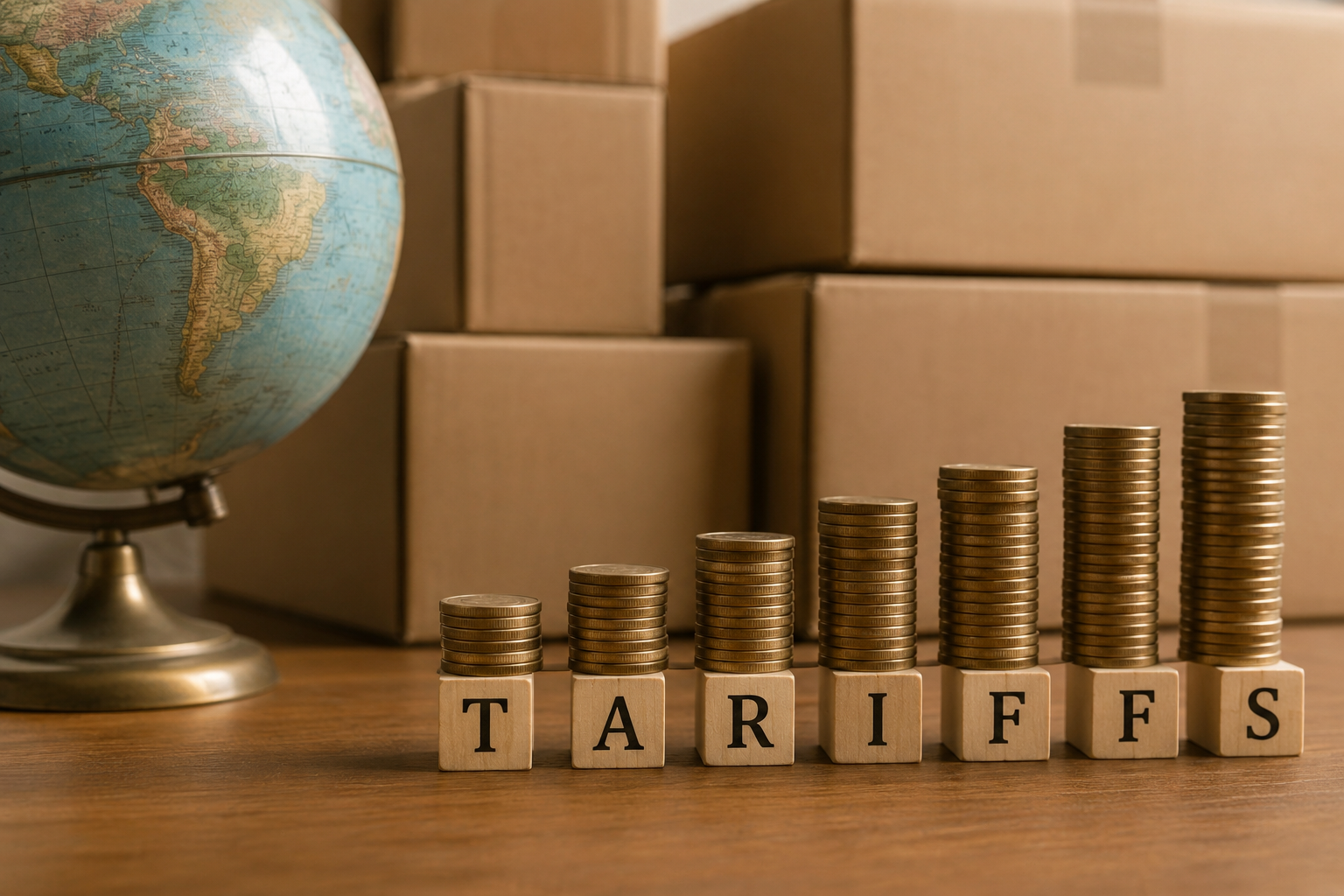
Markets stabilized after a brutal week.
Oil pulled back on Iran peace talk reports. The Dow led higher. The Nasdaq barely moved.
The Fed meets Monday with a 33 percent chance of increasing interest rates. Two consumer companies told completely different stories this week. Private capital had its best quarter on record. And a major tariff expired at midnight with almost no fanfare.
PMD LENS
AmEx beat and raised guidance. Albertsons crashed 22% a day earlier. Both results sit on the same Fed desk Monday morning. One says the consumer is fine. The other says the consumer is cracking. Hiking into both at once is genuinely complicated.
Why Nvidia is Investing in the "Energy Cube"

As AI's demand for electricity explodes, Nvidia is making moves in a surprising new area.
The company recently partnered with Los Alamos National Laboratory and backed a project tied to the technology known as the "Energy Cube."
One tiny stock sits at the center and a major government catalyst arriving in August could bring it into the spotlight.
- AmEx (AXP) fell over 4% despite the beat. Investors wanted faster growth.
- Intel (INTC) fell 8% despite beating afterhours Thursday.
- Oracle (ORCL) edged lower despite a $7 billion Pentagon deal.
- US PMI hit an eight-month high in July.
AmEx Beat. Albertsons Crashed. Two Different Consumers.
American Express (AXP) reported Q2 this morning. Earnings beat. Revenue rose sharply year over year. Card spending volumes grew. Full-year revenue guidance raised to 10%. Premium cardholders are spending more, not less.
The stock still fell 4%. Investors wanted growth accelerating faster. When you beat and still drop, the expectations were already too high.
One day earlier, Albertsons (ACI) crashed 22%. The grocery chain missed by more than 20% and slashed full-year guidance by the same amount. Grocery is supposed to be what people keep buying no matter what.
The gap between these two results is not noise. Gas above $4 does not change what an AmEx cardholder orders at a restaurant. It does change what an Albertsons shopper puts back on the shelf.
Oil around $90 drives diesel above $5. Diesel runs trucking and food distribution. Every cost increase flows to grocery shelves. Albertsons' guidance cut is the first earnings confirmation of that chain.
The Fed meets next week. A hike into a bifurcated consumer is a different decision than a hike into a strong one.
The Signal to Watch
Kroger, Walmart (WMT), or Costco (COST) confirming similar grocery pressure converts the Albertsons result from one chain's problem to a sector-wide squeeze.
ICE. The Epstein Files. Tariffs.
That’s what the media wants you to focus on.
But behind the scenes, it seems President Trump is quietly preparing something far more shocking — that will leave even his most loyal MAGA patriots stunned.
It’s NOT being debated on cable news or on X.
But it could make you enormously rich in the second half of 2026.
SIGNAL 1: Section 122 Expired. A New Tariff System Took Its Place.
Section 122 expired at midnight after reaching its 150-day limit. The administration immediately replaced it with new Section 301 tariffs covering more than 80 countries. Most rates remain around 10% to 12.5%, but the legal authority behind them has changed.
The shift matters because the White House is moving from a temporary emergency measure to a more established trade law that has survived court challenges before. The administration says the new tariffs target countries that fail to stop imports made with forced labor, though critics argue the policy is mainly a way to preserve broad tariffs after earlier legal defeats.
The Fed now faces two opposing inflation forces. Oil is pushing prices higher. The new tariff framework keeps import costs elevated while reducing legal uncertainty around trade policy. Officials meet next week knowing tariffs remain in place, but the next round of country-specific duties is still under review.
The Signal to Watch
Watch for new Section 301 announcements this weekend. The administration is still investigating another group of countries, and any additional tariffs could quickly shift the inflation outlook before the Fed meets.
SIGNAL 2: Blackstone Hit $1.35 Trillion. Three Funds Hit Hard Caps.
Blackstone (BX) reported Q2 on Thursday. Distributable earnings surged 26%. Total revenue jumped sharply. Assets under management hit a record $1.35 trillion. Nearly $70 billion flowed in during the quarter. Three funds hit their maximum size and stopped taking new money: opportunistic private credit, life sciences, and Asia private equity.
When a fund hits a hard cap, investors wanted to put in more than the manager would accept. That is excess demand being turned away.
Blackstone is launching a $2 billion data center REIT IPO. It partnered with Google to develop a new AI cloud provider. CEO Schwarzman noted US IPO activity rose sixfold in H1 2026 versus a year ago.
Public AI stocks spent this week getting sold hard. Blackstone's private AI infrastructure funds are turning investors away. That divergence is the real story.
The Signal to Watch
Apollo (APO) and KKR (KKR) confirming similar inflows converts the Blackstone result from one strong quarter into a documented structural rotation from public into private.
SIGNAL 3: NextEra Beat. AI Power Demand Is Confirmed at the Utility Scale.
NextEra Energy (NEE) reported Q2 this morning. Earnings beat consensus. The company added 4 gigawatts of renewables and storage backlog in a single quarter. Battery storage specifically grew within that. CEO Ketchum said US electricity demand continues to grow and NextEra can build at scale.
Four gigawatts of new backlog in three months is a big number. Battery storage matters specifically for data centers. They need reliable power around the clock, not just when conditions are right.
The AI power story has been told through capex commitments. NextEra is the utility-scale confirmation. A beat and an accelerating backlog at the grid level means demand is translating into real construction, not just announcements.
The Signal to Watch
NextEra naming a specific hyperscaler power agreement on the Q3 call converts the power thesis from infrastructure confirmation to customer confirmation.
WARNING: A Major Market Shift Could Hit Stocks in 2026
If you have any money in the stock market, you may want to pay attention.
New research points to a massive market-moving event that could send hundreds of popular stocks into a sudden free fall.
Holding the wrong stocks when this hits could erase years of gains.
That’s why analysts have now identified a list of stocks investors may want to avoid as this event unfolds.
If you want to see what’s coming — and which stocks could be most at risk —
A USTR announcement this weekend closing the tariff gap tells you whether the disinflation input disappears before the Fed speaks Wednesday. Kroger or Walmart confirming grocery pressure extends the consumer bifurcation to sector-wide. Apollo and KKR confirming Blackstone-level inflows confirms the rotation from public to private is structural. NextEra naming a hyperscaler power deal converts the power thesis to customer-level proof.
The Fed meets Tuesday and Wednesday with the consumer split between the AmEx cardholder buying more and the Albertsons shopper buying less. Oil sits at $89 after a spike above $92 yesterday. The tariff baseline just shifted overnight. And $70 billion just flowed into three private-capital funds that had to close to new money. The July 29 decision lands into a market where consumer strength, inflation input, and capital flow are all pointing in different directions at the same time. That is a very different backdrop than the June meeting.
AmEx confirmed the top of the consumer is fine. Albertsons confirmed the bottom is cracking. The tariff gap opened overnight. Blackstone turned investors away. NextEra confirmed power demand is real.
A USTR replacement this weekend, a second grocery operator cutting guidance, and Apollo and KKR confirming Blackstone-level inflows are the three signals that define whether the Fed decides with a full tariff baseline, whether the consumer bifurcation becomes sector-wide, and whether the rotation into private AI capital is structural.
