

JPMorgan, Jefferies, and PGIM warned the Treasury buyback break from "regular and predictable" raises yields over time. Walmart posted its weakest sales growth since 2020. Data center opposition is now a midterm "sleeper issue."
Bessent went on television today to defend the buyback. Bond yields rose anyway. The Dow fell 1.3%. Walmart fell over 9%. Advance Auto Parts (AAP) fell nearly 25%.
Crypto stocks bucked the trend. Bitcoin eclipsed $72,000. SpaceX (SPCX) fell after Musk pushed back the Starship timeline.
Yesterday's bond market intervention lasted less than 24 hours. Three Wall Street firms and two academic studies explained why. And data centers just became a midterm campaign issue. All four stories below.
PMD LENS
The Treasury moved the 30-year yield down 9 basis points Wednesday. The market gave back 7 of them today. Bessent went on television again today. Yields rose again. JPMorgan called it a "fleeting impact." ING called it "rearranging deckchairs on the Titanic." Jackson Hole is next Wednesday.
Did Trump Draw a Red Line Around This Mystery Stock?
|
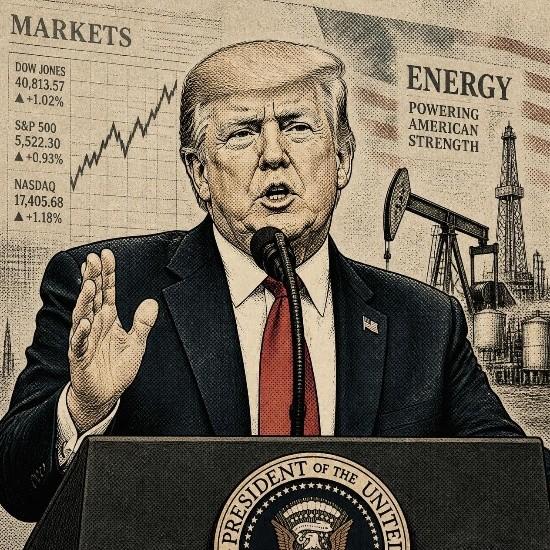
When a major U.S. trading partner targeted one American energy company’s profits, Trump publicly warned it was making a “big mistake.”
Why defend this company?
- Bessent: "There's nothing magic about the $40 trillion number."
- SpaceX fell nearly 5% after Musk pushed the Starship "catch" to months away.
- Moderna (MRNA) fell 23% the day after its 177% rally.
- Tariff refunds now total roughly $13.5 billion across eight named companies.
Wall Street Said the Buyback Treats Symptoms, Not Causes.
The Treasury's bond buyback moved the 30-year yield down 9 basis points Wednesday. Today saw 7 of those basis points return. Bessent went on CNBC today. He said buybacks could exceed $4 billion per operation. Yields rose anyway.
Three institutions named the problem.
Thomas Simons of Jefferies: "This break in communication strategy reduces the overall credibility of their guidance. This breaks with Treasury's long-held 'regular and predictable' strategy."
Jay Barry of JPMorgan: "This only addresses the symptoms and not the root cause. The US continues to run a 6% budget deficit in an economy near full employment."
Greg Peters of PGIM: "Does the US yield curve no longer get the benefit of the doubt? It's an open question." Peters sits on the Treasury Borrowing Advisory Committee.
Two academic studies arrived the same week. Ricardo Caballero of MIT found investors are now demanding higher yields from Treasuries. The safety premium has become an absorption premium. He estimates this shift explains roughly 0.75 percentage points of the 2.5 percentage point rise in yields since 2015. Hanno Lustig at Stanford reached similar conclusions. Since 2022, Treasuries no longer yield less than top-rated corporate bonds. When stocks fall, Treasury yields now tend to rise. That is the opposite of safe-haven behavior.
San Francisco Fed President Daly said the Fed is not ready to judge how Treasury moves affect its work. Warsh addresses Jackson Hole next Wednesday. That is the first comprehensive Fed response window to everything that happened this week.
The Signal to Watch
The 30-year closing above 5.30% in the next seven days confirms the market rejected the intervention. Warsh naming the "regular and predictable" framework at Jackson Hole signals whether the Fed-Treasury relationship is being actively managed.
The Closest Thing to a Virtual AI Monopoly Wall Street Is Ignoring

A little-known company is building what may be the closest thing to a virtual monopoly the AI era has ever seen.
Only 3...
Yet it beat Apple, Amazon, and the S&P 500 combined...
While paying out $146,000 in total dividends on a 1,000-share stake.
Kevin O'Leary calls what it controls a "unicorn."
Right now, it's trading at a rare discount.
>>>Whitney Tilson reveals the name, completely free.<<<
This ad is sent on behalf of Stansberry Research, 1125 N Charles St, Baltimore, MD 21201. If you would like to optout from receiving offers from Stansberry Research please click here.
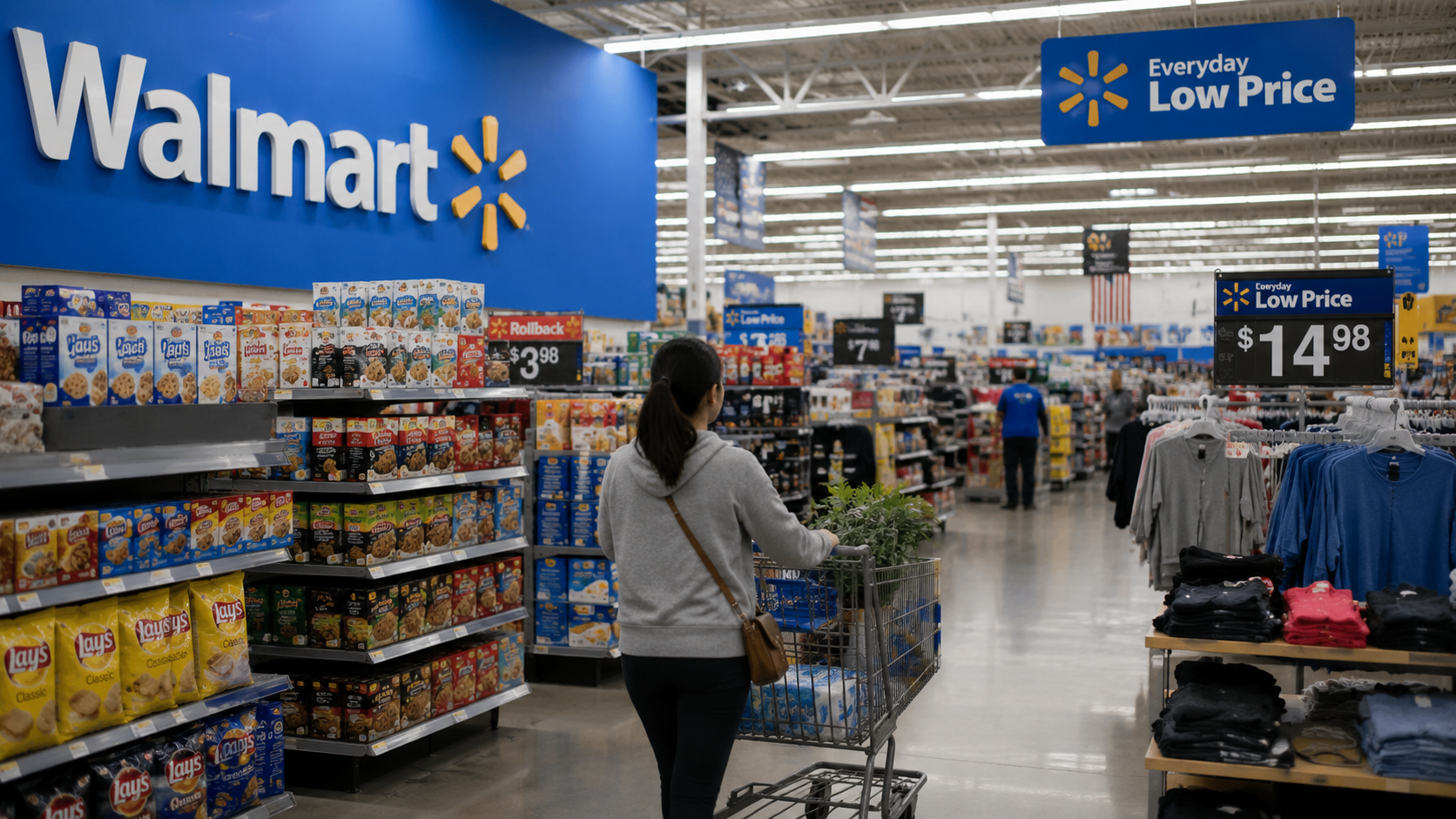
SIGNAL 1: Walmart Posted Its Weakest Growth Since 2020. Consumers Are Choosing Between Necessities.
Walmart reported 2.6% comparable US sales growth in Q2. The weakest since 2020. The stock fell nearly 10%. Without new pharmacy pricing rules, growth would have been 3.4%. Still below the 3.8% estimate. In-store comparable sales declined in the low single digits.
CFO John David Rainey: "It appears there were choices between necessities this quarter because of where gas prices are." Walmart is gaining share among households earning above $100,000. Lower-income shoppers are cautious but still spending.
Walmart received $2.9 billion in tariff refunds in Q2 and used some to lower prices. The tracked total is now roughly $13.5 billion across eight named companies. When those refunds stop, whatever price cushion they created disappears with them.
Target (TGT), Lowe's (LOW), and Home Depot (HD) all reported cautious consumer commentary. Four major retailers. Same theme.
The Signal to Watch
August retail sales in mid-September is the next read. A second consecutive miss confirms the slowdown is structural, not seasonal.
SIGNAL 2: Stripe Paid $7 Billion for OpenRouter. The Price Debate Is Settled.
Stripe paid more than $7 billion for OpenRouter. A 90-person company that routes AI model requests to cut costs. OpenRouter was valued at $1.3 billion earlier this year. That is a 5.4x markup in one funding round. Stripe's largest acquisition ever.
Patrick Collison: "Tokens are the central currency for companies building with AI."
The $7 billion figure confirms Bloomberg's reporting over WSJ's earlier $10 billion framing. Stripe is also pursuing a $53 billion PayPal (PYPL) acquisition alongside private equity. A payments company is simultaneously buying the routing layer between AI models and developers, and chasing a legacy fintech acquisition. Both bets run on the same premise. Whoever controls the token payment layer controls the margin.
The Signal to Watch
A competing payments-plus-AI acquisition in the next 90 days confirms this is a category move, not one company's decision.
SIGNAL 3: Data Centers Are a Midterm Issue. Three of Four Off-Grid Sites Have Failed.
The National Republican Senatorial Committee warned this week that data center opposition is a "sleeper issue" for the midterm cycle. Democrats lead the generic ballot by 6.4 points. NRSC memo: "If voters' perceptions are not fixed quickly, the campaign against them will expand far beyond Ohio."
Pennsylvania's governor signed an executive order Tuesday placing strict standards on data center development. Texas issued a similar directive in June. New York banned new construction for up to a year.
The operational picture is worse than the political one. There are four off-grid or partially connected data centers currently operating in the US. Three have already had documented power failures. Cracks formed at gas-fired turbines at xAI's Colossus facility in Memphis. Vantage Data Centers in Virginia switched to diesel backup for a full day. Anthropic pays $1.25 billion per month for computing capacity at Colossus. One outage day costs tens of millions of dollars.
The Signal to Watch
A fourth state issuing a moratorium in the next 60 days confirms the political opposition is spreading systematically. Any power failure at Amazon's 7.65-gigawatt Texas campus converts the single-facility risk into a hyperscaler-scale test.
Could This Stock Be “Trump’s Next Big Buy”?
Jim Rickards believes the Trump administration is about to take a direct stake in a tiny $2 stock.
The Trump administration has taken a direct stake in MP Materials, Lithium America, Trilogy Metals, and USA Rare Earth.
Each time, shares sprinted higher. Click here to see why Jim believes this one is next.
The buyback moved yields 9 basis points Wednesday. The market took 7 of them back today. Bessent went on television and yields rose again. Walmart said consumers are choosing between necessities while eight companies cushioned this quarter with $13.5 billion in tariff refunds that do not repeat. Stripe paid $7 billion for 90 people and a routing table. Three of four off-grid data centers have already failed and the midterms are three months away. Every framework tracked this week converges on the gap between what the buyback addresses at the term-premium layer and what the fiscal deficit requires at the structural layer. That gap sits alongside the gap between what $13.5 billion in tariff refunds added to Q2 and what disappears from Q3. Both gaps get tested against the flash PMI tomorrow and Jackson Hole next Wednesday.
The buyback's half-life was 24 hours. The market confirmed it. Walmart named the consumer. Stripe named the AI payments layer. Off-grid power failures named the execution risk at scale.
Flash PMI tomorrow, Jackson Hole next Wednesday, and August retail sales in mid-September are the three signals that define whether the credibility gap at the long end is structural or temporary, whether the consumer slowdown is seasonal or sustained, and whether data center opposition reaches a fourth state before November.
