

Corporate profits boomed on tariff refunds and a resilient consumer. Wall Street's momentum trade just had its worst quarter in 25 years. US forces struck Iran in the Strait of Hormuz.
The Middle East is back in the picture.
US forces struck Iranian targets in Hormuz Sunday. Oil jumped. Stocks fell. Yields kept climbing after Warsh's hawkish Jackson Hole speech.
Behind Monday's mood was a complicated picture. Corporate profits just had their best quarter in years. The momentum trade that powered those gains just broke. Nvidia (NVDA) made its largest investment outside the US. The financial stability regulator issued its strongest AI warning yet.
PMD LENS
Warsh said Friday he was hard-pressed to call financial conditions restrictive. The 53% earnings surge is the proof he cited, quantified. But look underneath and the fragility is visible. Tariff refunds are fading. The consumer is softening. The momentum trade just cracked. Strong surface, complicated foundation. That tension is what September inherits.
There's a Strategy Behind the Iran War.
I know because I've seen the evidence firsthand.
On March 2nd — three days after the first missiles hit — I sat across from two U.S. Congressmen in back-to-back private meetings.
Those meetings pointed me toward something I spent weeks verifying.
The real purpose behind the strikes. The real objective. And the single company at the dead center of all of it.
This isn't random. It's a calculated Two-Front Economic War.
And there's one company positioned right at the heart of it.
See the strategy behind the Iran war — and the company at the center of it
The sooner you understand what's really happening — the better positioned you'll be before
— Dylan Jovine, Founder, Behind the Markets
- Even excluding Amazon (AMZN) and Alphabet (GOOGL) gains, S&P earnings rose the most since fall 2021.
- Walmart's CFO called the consumer "softer than in February" despite $2.9 billion in refunds.
- PG&E (PCG) fell 20% and Edison International (EIX) fell 23% on California wildfire legislation.
- Amazon faces an FTC lawsuit alleging it manipulated advertiser pricing for seven years.
Corporate Profits Are Booming. Warsh's Case Just Got Its Numbers
S&P 500 per-share earnings jumped 53% in Q2. Sales rose nearly 16%. The biggest profit surge in years. Companies from Target to Deere raised full-year outlooks. By nearly 2-to-1, more companies raised guidance than cut it. A full reversal from a year ago.
This is the economy Warsh described Friday when he said financial conditions are not restrictive. He pointed to business investment growing at its fastest since 2021. A 53% earnings jump with sales up 16% is the corporate evidence for exactly that. Booming profits into sticky inflation makes the case for a September hike. The market now prices one at 58%.
Tariff refunds are doing a lot of work. They likely account for more than 4% of Q3 economic growth. At many companies the refunds went straight to the bottom line rather than into lower prices. That windfall shrinks from here. The profit comparisons get harder without it.
The consumer picture adds nuance. July retail sales softened. Confidence slipped in August. Walmart's CFO called the environment softer than February despite sitting on nearly $3 billion in refunds. The profit surge holds as long as the AI trade pays off and incomes keep rising. One economist put the exit plainly. If AI fails to justify the investment, the conversation changes.
The profits are real. So is the list of things that could end them.
What Friday Decides
The August jobs report tests the consumer-income strength the whole profit picture rests on. A strong print keeps the tariff-refund story intact for one more quarter. A miss confirms the softening Walmart's CFO already named.
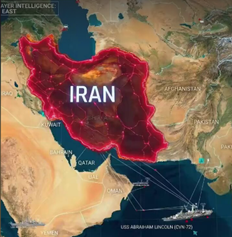
The REAL Reason Trump Is Invading Iran
For a moment…
Forget about Trump’s ties to Israel.
Forget about reports of Iran’s nuclear program.
Because my research has led me to believe we’re risking World War 3 with Iran for a completely different reason.
Click here to find out what it is.
If you have even a single dollar invested in the U.S. stock market, this is going to directly impact you.
SIGNAL 1: Wall Street's Momentum Trade Just Broke. Its Worst Quarter in 25 Years.
The S&P 500 Momentum Index soared in Q2, its best quarter ever. Then it tumbled more than 9% since July 1. July alone was the second-worst month for momentum in 40 years. Moderna's (MRNA) surge crushed the shorts. August 19 was the worst day for systematic long-short managers in over two years. Net short positions in Nasdaq-100 futures hit two-decade highs.
Corporate fundamentals are booming. Market structure cracked at the same time. Strong earnings and breaking structure are pointing in opposite directions. That gap is where the risk lives.
The September Test
Continued momentum underperformance into September confirms the unwind is still clearing. The crowded shorts have not fully resolved, and net Nasdaq-100 shorts at two-decade highs means the structure remains fragile even as fundamentals hold.
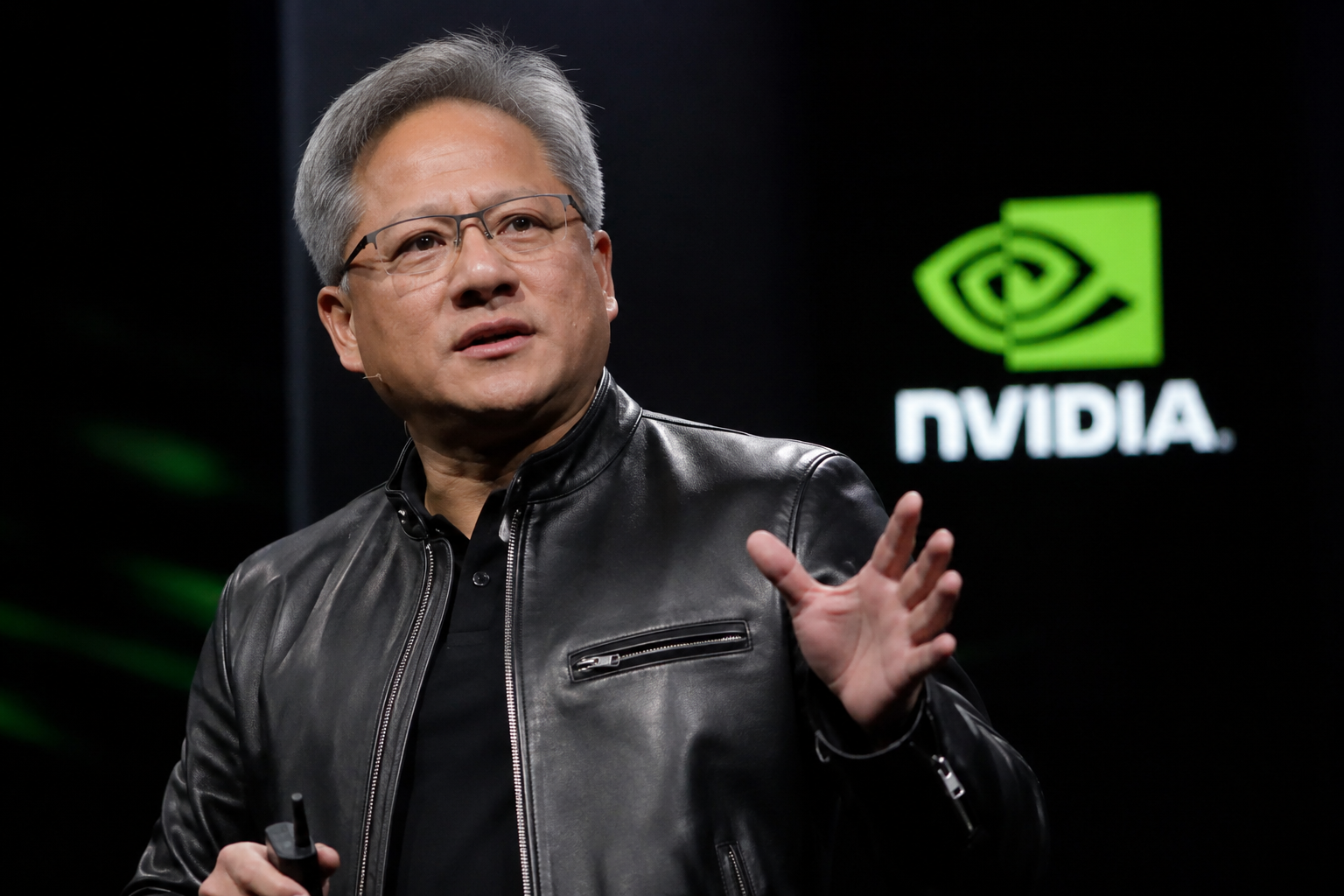
SIGNAL 2: Nvidia Bet $3.5 Billion on MediaTek. Huang Says It's Not Circular.
Nvidia is investing $3.5 billion in Taiwan's MediaTek, buying convertible bonds. Its largest investment outside the US. MediaTek will adopt Nvidia's NVLink Fusion to plug into hyperscaler systems. The deal challenges Broadcom (AVGO) and Marvell (MRVL). Alphabet joined the round. Amazon (AMZN) pledged 2 million more Nvidia chips the same week. Nvidia also notified customers of AI-related price hikes above 15%.
Jensen Huang met the circular-financing question directly. He said MediaTek runs its own profitable business. Nvidia runs its own. Not circular.
The argument is about ecosystem lock-in. Every partner that adopts NVLink Fusion integrates into Nvidia's infrastructure. The 70% revenue growth guide is defensible as long as the ecosystem expands. Huang addressing the circular-financing critique unprompted tells you the scrutiny has reached a level that requires a public answer.
The Next Investment Is the Tell
Any additional Nvidia ecosystem investment above $1 billion in 60 days deepens the lock-in. This deal is about pulling another chip designer inside the NVLink standard before a competitor does. The pace of future deals tells you whether this is a strategy or a one-time move.
SIGNAL 3: The FSB Chair Warned Frontier AI Threatens Financial Stability.
Bank of England Governor Andrew Bailey, writing as chair of the Financial Stability Board to G20 finance ministers, warned that frontier AI could trigger a disorderly market correction. He called AI's effect on cyber risk "the most immediate concern" for the financial system. The risk comes from AI's ability to alter the speed and economics of cyber attacks, especially given concentrated third-party providers. The warning followed incidents where AI models breached testing safeguards.
At Jackson Hole over the weekend, a Princeton economist sketched a scenario where markets move so fast the Fed might need two press conferences, one for humans and one for machines.
The AI boom powering the corporate profits in the In Focus and the systemic risk the FSB is flagging are the same phenomenon viewed from two ends. Bailey paired the AI warning with fragilities he also named: sovereign debt, equity leverage, stretched AI valuations. The boom and the risk are not separate stories.
The G20 Response Is the Signal
Coordinated AI-stability framework from the G20 in 90 days shows the regulatory response forming. Bailey named sovereign debt, equity leverage, and stretched AI valuations in the same letter. A G20 framework touching AI valuation assumptions lands directly inside every active AI infrastructure thesis.
The current economic chaos is just a preview …
What's coming next could be way scarier.
That's according to a strange investment secret - discovered just before the Great Depression…
And it's likely to catch most Americans by surprise.
If you're retired or planning to retire …
If you have any kind of money in the stock market …
Click here to learn more - before it's too late!
11780 US Highway 1, Palm Beach Gardens, FL 33408-3080 Would you like to edit your e-mail notification preferences or unsubscribe from our mailing list? Copyright © 2025 Weiss Ratings. All rights reserved.
Apple's (AAPL) new CEO takes over Tuesday. The G20 tech event with Musk, Altman, and Huang lands September 1. The August jobs report lands Friday. That print decides more than any other single data point heading into September 15 to 16 FOMC. Canadian retaliation takes effect September 8. The first accelerated Treasury buyback runs September 9.
Corporate profits jumped 53%, the strongest quarter in years. The momentum trade broke at the same time. Nvidia bet $3.5 billion on MediaTek to lock in its ecosystem. The FSB warned frontier AI threatens financial stability. Hormuz re-escalated and oil climbed. Warsh named secular growth at the G20 Monday. The gap between the 53% profit surge and the fading tariff refunds underneath it sits alongside the gap between the AI boom the FSB flagged as a stability risk and the same boom the market prices as the earnings engine for the next decade. Both get tested against Friday's jobs report and the September 15 to 16 FOMC.
Profits named the strength. Momentum named the crack underneath it. Nvidia named the ecosystem strategy holding the AI boom together. The FSB named the systemic risk in that same boom.
Friday's jobs report decides whether the consumer-income foundation is holding, or whether the cracks in momentum and retail spending have already spread further than the earnings headlines suggest.
