


A data center bond tied to Microsoft priced at junk-level yields today. A chip startup raised at a $21 billion valuation with Nvidia's own engineers. Housing starts hit their worst since 2022.
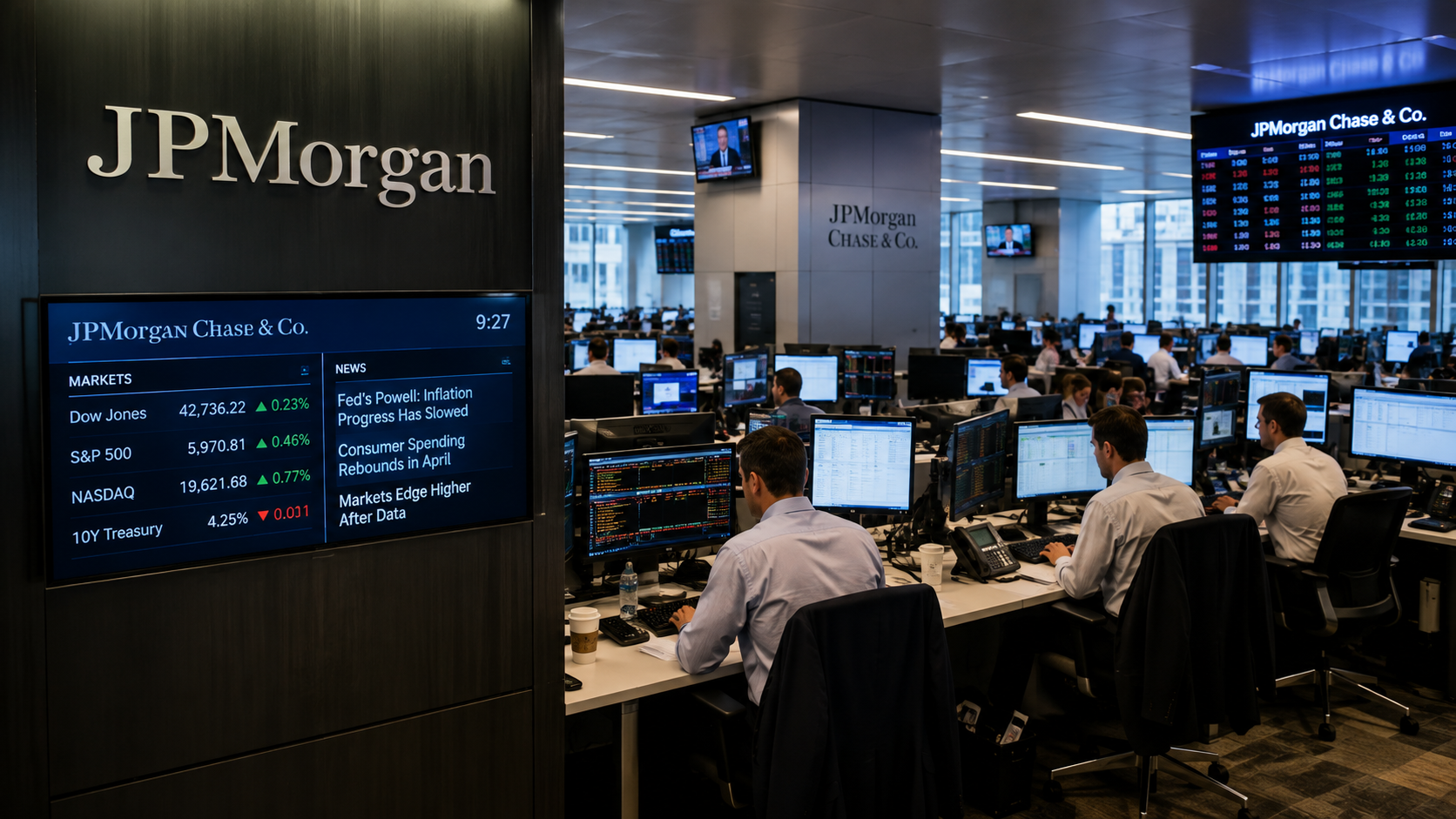
Global bond yields hit multi-decade highs today.
Stocks fell. The 30-year Treasury is at levels not seen since 2007. Iran talks are stalled. Oil climbed higher. The market is catching up to a reality it tried to ignore.
Beneath the surface, something specific happened today in the debt markets. The AI infrastructure buildout, which has been the engine of this entire rally, just got a pricing signal it cannot dismiss. The cost of funding the buildout went up. Sharply. Four stories explain why that matters and where else the pressure is showing.
PMD LENS
When an investment-grade deal prices like junk, the market is saying something the rating doesn't. QTS Realty's Project Odyssey priced at 7.63% today. That is where single-B junk bonds trade. The same company's older bonds, issued at 5.7% in April, now trade at 7.16%. Investor appetite for AI infrastructure paper has not disappeared. It has become significantly more expensive.
Wall Street Just Got a Warning About AI
Nvidia's credit default swaps saw their biggest one-day jump on record, with the company losing $250 billion in market value.
Investors are starting to realize that AI needs more than chips.
It needs real human data.
That's where Mode Mobile has quietly built its edge.
Mode's EarnOS rewards users for everyday smartphone activity, creating a vast ecosystem of opted-in, first-party data with applications across advertising, commerce, and AI.

While others build AI infrastructure, Mode is building the data layer that powers it.
Their traction is hard to ignore:
● 490M+ total users
● 100M+ monthly active users
● $115M+ cumulative revenue
● $100M+ invested
Deloitte named Mode the #1 fastest-growing software company in North America after 32,481% 3-year revenue growth in 2023.
⏰ Invest at $0.55/share before the round closes.
Disclosures *Please read the offering circular and related risks at invest.modemobile.com. *Mode cumulative revenue includes full year revenue of businesses acquired in 2025. Mode Mobile recently received their ticker reservation with Nasdaq ($MODE), indicating an intent to IPO in the next 24 months. An intent to IPO is no guarantee that an actual IPO will occur. The Deloitte rankings are based on submitted applications and public company database research, with winners selected based on their fiscal-year revenue growth percentage over a three-year period.
- QTS bonds won't be callable for two years, a junk bond feature.
- Etched's chips run inference almost 6x faster than Nvidia's Blackwell at specific tasks.
- Home Depot rolled out nationwide three-hour express delivery this quarter.
- Russia loaded zero crude at its key Black Sea port last week.
Investment-Grade Data Center Paper Just Priced Like Junk.
Blackstone-backed QTS Realty Trust opened its Project Odyssey bond today. The deal funds a Microsoft (MSFT) data center. Initial pricing came in at 7.63%. That's 231 basis points above the 30-year Treasury. For context, that's where single-B rated junk bonds trade, not where Baa3/BBB- rated paper belongs.
QTS issued similar bonds in April at 5.7%. Those bonds now trade at 7.16%. In four months, the market's price for this paper has moved more than 140 basis points. The deal is expected to close around $3.9 billion, about $1 billion larger than initially floated. Demand exists. The cost of that demand has changed dramatically.
The broader story is investor exhaustion. Companies funding AI infrastructure flooded the bond market this year. Investors initially rushed in. More recently they've started pushing back, demanding better terms and higher yields. Alphabet (GOOGL) has had to offer concessions on recent deals. A separate $2.25 billion data center deal last week has also weakened in secondary markets.
This is not a collapse in demand for AI infrastructure. It's the market demanding to be paid more for the risk. The structure of today's deal, a two-year no-call feature, looks more like junk financing than investment-grade. The rating says one thing. The pricing says another.
The Reference Point Going Forward
Any data center bond that comes after QTS prices against 7.63%. That is the new floor the market has established for unguaranteed AI infrastructure paper.
The REAL Reason Trump Is Invading Iran

For a moment…
Forget about Trump’s ties to Israel.
Forget about reports of Iran’s nuclear program.
Because my research has led me to believe we’re risking World War 3 with Iran for a completely different reason.
Click here to find out what it is.
If you have even a single dollar invested in the U.S. stock market, this is going to directly impact you.
SIGNAL 1: Etched Raised $700 Million at $21 Billion. Fifteen Percent of the Team Is Ex-Nvidia.
Etched is an AI chip startup. Three Harvard dropouts in their early 20s founded it. Jane Street led a new $700 million funding round. The valuation came in at $21 billion. That beats the $20 billion Nvidia (NVDA) paid for Groq in December.
Jane Street is also Etched's first customer. The startup has booked over $1 billion in orders. It is already shipping chips. Roughly 60 engineers, about 15% of the entire company, came from Nvidia. Some turned down counteroffers to join.
The chip Etched makes is optimized for inference, meaning running AI models after they've been trained. It runs specific tasks significantly faster than Nvidia's most advanced hardware. The Jane Street bet is notable. The same firm that took a $15 billion AI-related loss six weeks ago is now leading the largest AI chip startup round of the summer.
The Nvidia Response Is the Test
When a startup worth $21 billion has 15% of its team from one competitor, that competitor notices. Any public Nvidia response converts this from a startup story into a market structure question.
SIGNAL 2: Housing Starts Fell to Their Worst Level Since 2022. Home Depot Said Conditions Are Frozen.
Housing starts dropped 12.4% in July. Single-family starts fell to their lowest since November 2022. Economists expected a much smaller decline. Starts fell across the South, Midwest, and West simultaneously. Completions also hit their lowest since 2020.
Home Depot (HD) beat earnings estimates by 19 cents. A $685 million tariff refund contributed roughly 52 cents per share. Underlying operating margin fell year over year. CFO Richard McPhail called housing conditions 'frozen.' Sales in smaller project categories held up. Big renovations aren't happening. The stock rose just over 1% on a solid beat, which tells you something about how investors read the frozen housing commentary.
The 30-year Treasury yield sitting near 5.3% feeds directly into mortgage rates. High mortgage rates lock homeowners in place. They don't sell because they'd lose a lower rate. They don't buy because they can't afford a higher one. The market freezes. The July starts print confirmed that freeze is deepening.
What Breaks the Freeze
Mortgage rates need to move meaningfully lower before starts recover. That requires either Fed action or a significant drop in Treasury yields. Neither is imminent.
SIGNAL 3: ByteDance Drew $30 Billion in Orders for a $20 Billion AI Loan.
ByteDance launched a $20 billion loan to fund AI infrastructure. More than $30 billion showed up. Commitment deadline is Wednesday. Citigroup (C) and JPMorgan (JPM) are running it.
ByteDance is weighing $70 billion in capex this year and potentially $100 billion next year. US hyperscalers are planning around $725 billion combined. Add ByteDance and the global AI buildout is materially larger than the US-only number suggests.
The contrast with QTS is the story. ByteDance drew 1.5 times oversubscription at normal terms. QTS needed 7.63% to clear rated paper in the US market. Same asset class. Very different pricing. Investor appetite for AI infrastructure depends entirely on who is borrowing and where.
China's AI Buildout Is Accelerating Regardless
Even without US chip access, ByteDance is financing infrastructure at a scale that rivals individual US hyperscalers. The buildout is global and the funding is flowing.
Satellite Confirms: Elon Musk Activating Strange 'Dark Energy' Across U.S. South
Confirmed by satellites 300 miles above the Earth's surface... Elon Musk is rolling out a breakthrough technology that could replace our need for foreign oil and ignite a $10 trillion boom a small group of stocks. Click here to learn how you can invest in this before it becomes mainstream.
FOMC minutes Wednesday tell you what the committee was actually saying before the soft data streak landed. Target reports Wednesday. Walmart reports Thursday. Both give you the next consumer read after July's retail miss. Flash PMI Friday closes the week's data picture. Jackson Hole on August 27 is where Warsh either signals September or keeps everyone guessing for another month.
QTS priced Project Odyssey at 7.63%, junk yields for investment-grade paper, while its April bonds repriced from 5.7% to 7.16% in four months. Etched raised $700 million at $21 billion backed by the same firm that lost $15 billion on AI six weeks ago. Housing starts hit a four-year low while Home Depot called conditions frozen. ByteDance drew $30 billion in orders for a $20 billion loan while weighing $100 billion in 2027 capex. The gap between funding AI in US bond markets versus offshore syndication is now visible and measurable in a single afternoon. That gap sits alongside the gap between investment-grade ratings and junk-bond yields on the same paper. Both get tested against the FOMC minutes Wednesday, two consumer earnings prints this week, and Jackson Hole August 27.
Investment-grade data center paper priced at junk yields. Nvidia engineers left for a $21 billion startup. Housing starts hit their worst in years. ByteDance borrowed $20 billion while US investors demanded 7% to fund a Microsoft data center.
The FOMC minutes Wednesday, Target and Walmart this week, and Jackson Hole August 27 tell you whether today's pricing signals are a temporary squeeze or the new permanent cost of funding the AI buildout.
