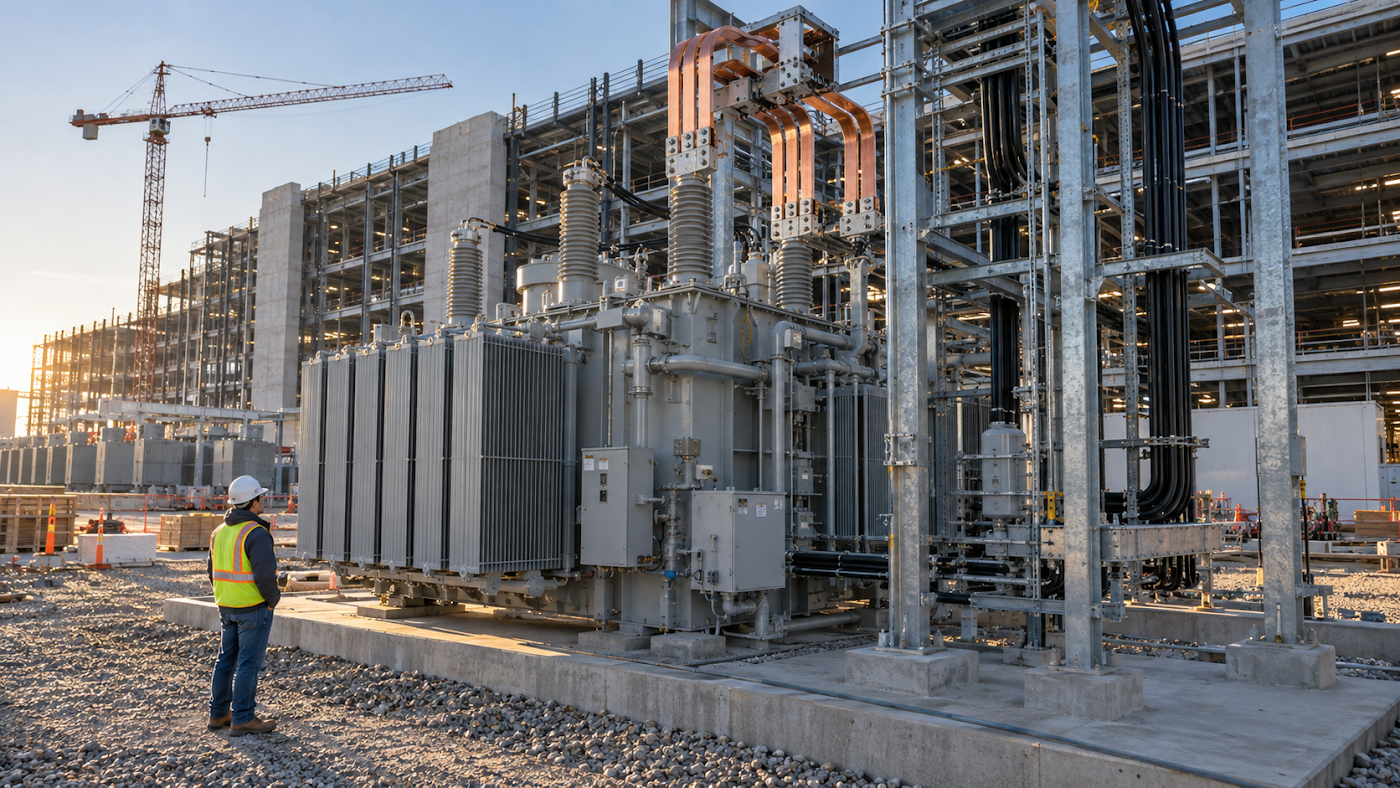
THE NUMBER 288 basis points.That is what default insurance on Oracle (ORCL) debt cost overnight. It was a record, S&P Global data show. SoftBank's rose too. CoreWeave (CRWV)'s passed 1,000, LSEG data show. Its bonds due 2032 traded near 77 cents on the dollar. Swaps on Amazon, Meta and other big tech names hit records too, at far lower levels. Markets now charge more to insure AI's borrowers. PREMIER FEATURE Lately Every Top Stock List Has Started Looking the Same.Nothing wrong with Nvidia, Tesla, or SpaceX — but we believe there are plenty of other top-quality opportunities for investors willing to dig into the details. That's why our MarketBeat analysts built an all-new list of the 5 Best Stocks to Buy Now. Every company on the list: - Worth at least $5 billion
- Strong fundamentals
- Strong growth prospects ahead
You'll get the full bull case — and the full bear case — for each stock. Every opportunity, every risk, every factor we considered. So you can invest with confidence. The report is called 5 Stocks to Buy Now — and it's yours free today. 👉 Send My Free Report THE SETUP - South Korea's Kospi fell 7.6% and tripped a circuit breaker for the first time since July. It was its seventh straight loss. Samsung and SK Hynix fell 9% or more. Japan's Nikkei fell 4.9%. Nasdaq futures were down more than 1% early Thursday.
- Brent fell faster than U.S. crude overnight. It was near $104.60 early Thursday. U.S. crude was flat near $95. The dollar slipped.
- At 8:30 a.m., producer prices, retail sales and jobless claims land. Diesel is carrying the oil shock into business costs. Heating oil for homes rose about 15% in September. The Beige Book said fuel surcharges were passing higher costs through supply chains.
- Ericsson beat forecasts by a wide margin, partly on back-dated license fees. By about 7 a.m., its U.S. shares were up about 12%.
IN FOCUS The AI Selloff Reached the Lenders. TSMC Says Demand Has Not Slowed.Last night, PMD said that if the data kept a hike alive, debt rollover may be the next test. Before the data, hike odds faded. The cost to insure AI borrowers' debt rose anyway. CoreWeave was down about 7% more before the open. Rates were only part of it. Long Treasury yields fell, but credit costs for single firms kept rising. Some investors read that as stress tied to how AI gets paid for. TSMC says its chips are still selling. TSMC beat its own forecast, and profit rose 69% to a record. It expects sales to jump again this quarter, by about 14% at the midpoint. CEO C.C. Wei called AI demand "extremely robust." He also said rising part costs are straining consumer and price-sensitive markets. "As such, we are being prudent in our business planning going into 2027," he said. By about 6:50 a.m., TSMC (TSM) shares in New York were down about 2%. TSMC Says Chip Demand Held. The Price of Funding It Rose. For lenders to AI builders, TSMC's quarter answers the demand question, for now. The open question is what builders pay to borrow. If these costs stay near records, new debt for firms like CoreWeave would cost more, and building plans could slow. The first test is whether broad credit gauges follow the swaps wider when U.S. trading opens. FROM OUR PARTNERS Take a look at this… It's a radical "light-speed" device that's turning AI as we know it into "Accelerated AI", making it 100 times faster and 100 times more energy efficient. In fact, Jensen Huang, Nvidia's founder and CEO, says this device is shattering the limitations of AI and without it, AI can't scale. If you want to discover what this technology is, why Nvidia is betting billions on it… And the one stock we believe could be the biggest winner when "Accelerated AI" goes mainstream… Click here to see all the details. SIGNALS IN MOTION SIGNAL 1: Clear Channel Went Private on $3.3 Billion of Equity. The Preferred and Debt Committed in February Were Not Among Its Closing Sources.Clear Channel's closing filing lists three sources of cash. About $3.3 billion was equity from funds tied to Mubadala. The rest was $100 million of added loans and company cash. At signing in February, Apollo funds planned to buy preferred stock. A JPMorgan-led bank group and Apollo funds committed debt. Neither appears among the sources. About $1.3 billion went to shareholders. Most of the rest paid off its nearest bonds. Venture backers also wrote a big check. Modal's value more than tripled in five months, to $15.75 billion. The AI cloud startup says it passed a $1 billion yearly run rate. That is its own figure, not audited sales. What resolves this Clear Channel's other bonds will show whether buyers see the equity as a cushion. For Modal, a tender or share sale would test the new price. SIGNAL 2: The October Hike Bet Gave Back 86% of Its Jump. Three Gauges Now Sit Near 25%.Last night, PMD said Kalshi sellers had taken back more than half of the jump. They kept selling. The October hike contract went from 18 cents to 55 after CPI. By about 6 a.m. Thursday, it was near 23 cents. Polymarket and CME FedWatch showed about the same odds. Long Treasury yields fell Wednesday despite the hot print. The 10-year closed at 5.19%. Short yields rose. The Beige Book found spending little changed in most of the country. What resolves this A hot PPI with firm retail sales could lift the contract back into the mid-30s. Soft numbers would point back toward 18 cents. SIGNAL 3: Bitcoin Fell With Asian Chip Stocks as Hike Odds Eased. Ether Fell About Twice as Far.Bitcoin slid below $81,000 at about 10:20 p.m. as Asian chip stocks fell. Hike odds and the dollar were easing then. Early Thursday, it was near $80,900. Last night, PMD said Wednesday's fund flows would show whether bitcoin buyers stayed. On net, they did not. U.S. bitcoin funds lost about $261 million that day, Farside data show. Ether fell about 5.3% in 24 hours to a two-month low. More money in ether bets was forced out than in bitcoin bets, CoinGlass data show. Ether's futures market is much smaller. VanEck also pulled its plan for a Lido staked-ether fund. It gave no specific reason. What resolves this Thursday's fund flows will show whether the selling continues. If bitcoin keeps trading with tech stocks, credit news may move it more than the 8:30 data. PARTNER SPOTLIGHT Louis Navellier: My #1 AI stock for 2026 (name & ticker inside)
"I want to give you a free stock pick today. This company's sales are up 28% year over year. It holds over 30,000 patents in wireless and video technology. And it just earned an A-rating in my proprietary Stock Grader system. That's the same system that helped me flag Nvidia back in 2005 — before its 82,000% run. In fact, this system has identified the top-performing S&P 500 stock for 12 years running. Over the years, it has cost me $9 million to build and maintain. And right now, it's flashing its highest possible rating on this AI play." — Louis Navellier Click here to see which AI stock my $9 million system is flagging right now, free. This ad is sent on behalf of InvestorPlace Media at 1125 N. Charles Street, Baltimore, Maryland 21201. If you're not interested in this opportunity, please click here. THE CROSSOVER Private Market Trends Driving Public Market MovesCredit markets are charging more to carry AI's risk. Equity buyers are still writing big checks. TSMC's record quarter shows its chips are selling. The strain sits with those who fund the buildings. Oracle's and CoreWeave's swaps reprice that daily. Private checks reprice less often. Clear Channel's buyer leaned on its own equity, and Modal's price rests on a run rate. If credit stays tight, the next buyouts and AI builds may lean on more equity and less debt. A reset in public AI prices could reach late-stage private ones next. On the calendar... When | Event | Thu., Oct. 15 | PPI, retail sales and jobless claims, 8:30 a.m.; Schwab reports; Warsh with the IMF's Georgieva, 11:30 p.m. | Fri., Oct. 16 | Weekly bitcoin options expire | Oct. 27-28 | Fed meeting | Nov. 10 | October CPI; TSMC's October sales |
3 Market Signals Most Investors Aren't WatchingThe headline is usually the last place the story shows up.
By the time everyone is talking about a stock… the signals underneath it may have been changing for weeks. • Institutional money moves. • Options activity changes. • Management confidence shifts. • Fundamentals improve, or quietly begin telling a different story. That’s exactly what our analysts found in three stocks where the evidence stopped agreeing with itself.
And in all three cases, the story is still developing. See the 3 Stocks, Get the Free Report → |