


Larry Fink compared Nvidia's $500 billion financing platform to the birth of the mortgage-backed securities market. Private credit firms are clamping down on deferred interest loans. US forces fired on a ship breaking the Iran blockade.

Stocks slipped today ahead of tomorrow's CPI print.
Volume is near its lowest of the year. WTI rose another 1.5%, its fourth straight day in the green. Traders are waiting.
Intel (INTC) upsized its stock offering from $15 billion to $20 billion. Riot Platforms (RIOT) surged on a cloud deal with Anthropic. On Holding (ONON) fell hard on weak sales.
Larry Fink made a comparison this morning that deserves your full attention. A US military helicopter fired on a ship near Iran. And the housing market just sent a clear signal about where rates are heading.
PMD LENS
Fink chose the specific historical comparison. The 1970s mortgage-backed securities market. That framework defined four decades of financial engineering. It also defined 2008. Both readings are inside the same sentence. Tomorrow's CPI print is the first data test on which reading matters more right now.
Unicorn in the making?
Some companies you only hear about after they IPO.
And some…
Eventual unicorns like Uber, Airbnb and OpenAI…
Forced the world to pay attention long before that.
Mode Mobile could be a new member to that second group.

Uber turned cars into taxis, Airbnb turned homes into hotels, and Mode Mobile is turning smartphones into EarnPhones.
With $115M+ in revenue, 3-year growth of 32,481%, and an ecosystem with more than 490M+ users, it’s what investors call a “category disruptor.”
The kind that could turn early capital into generational wealth.
They’re raising privately.
For now.
But investors can get $0.52 pre-IPO shares before their share price changes on August 14.
With a Nasdaq ticker ($MODE) secured, and early backers like Kevin Harrington from Shark Tank, the company has its eyes on potentially going public.
Their previous two raises sold out, and this one is on track to do the same.
⏰Review the offer before August 14.
Disclosures *Please read the offering circular and related risks at invest.modemobile.com. *Mode cumulative revenue includes full year revenue of businesses acquired in 2025. Mode Mobile recently received their ticker reservation with Nasdaq ($MODE), indicating an intent to IPO in the next 24 months. An intent to IPO is no guarantee that an actual IPO will occur. The Deloitte rankings are based on submitted applications and public company database research, with winners selected based on their fiscal-year revenue growth percentage over a three-year period.
- Intel upsized its offering to $20 billion at $95 per share.
- Riot Platforms surged on a $9.1 billion Anthropic cloud deal through 2048.
- The yen is weakening again toward 159 per dollar. Near intervention territory.
- 81% of traders now expect US rates to end 2026 higher than today.
Fink Compared Nvidia's $500B Platform to the Birth of MBS. Both Readings Apply.
Nvidia (NVDA) CEO Jensen Huang unveiled what he called his "big concept" alongside leaders from Goldman Sachs (GS), BlackRock (BLK), Blackstone (BX), KKR (KKR), Apollo (APO), and Brookfield (BN). Together they committed to raise $500 billion, and potentially more, for AI factory construction.
Huang: "These systems are not like our PCs, not like our phones. These are revenue-generating assets now. They're productive, they're long-lived, they're fungible, they're flexible."
BlackRock CEO Larry Fink: "This is the very beginning, like what it was when I started in the mortgage-backed securities market in the 1970s. I look upon this as the next future for financial engineering."
Goldman's David Solomon added that asset-based financing against infrastructure is not surprising because these are real assets with real value. KKR's head of digital infrastructure said you can securitize the revenue stream and sell it to investors across the risk spectrum.
Nvidia will backstop 25% of every loan under the platform. Borrowers must use Nvidia-specified architectures that allow another operator to step in if a company fails. Jim Zelter of Apollo said there will be excesses and pullbacks. Solomon said some companies will win and some will disappoint.
Fink's comparison is precise. The 1970s MBS market became the defining financial innovation of the following four decades. It also became the defining failure mode of 2008. Both outcomes are inside the same sentence. This morning's private credit story adds the credit-cycle context that sits underneath the platform launch.
The Signal to Watch
Any first securitized data center bond issuance under the $500 billion platform in the next 60 days converts this from a concept to a market. Any rating agency publishing a methodology for data center collateralized paper confirms the asset class is real.
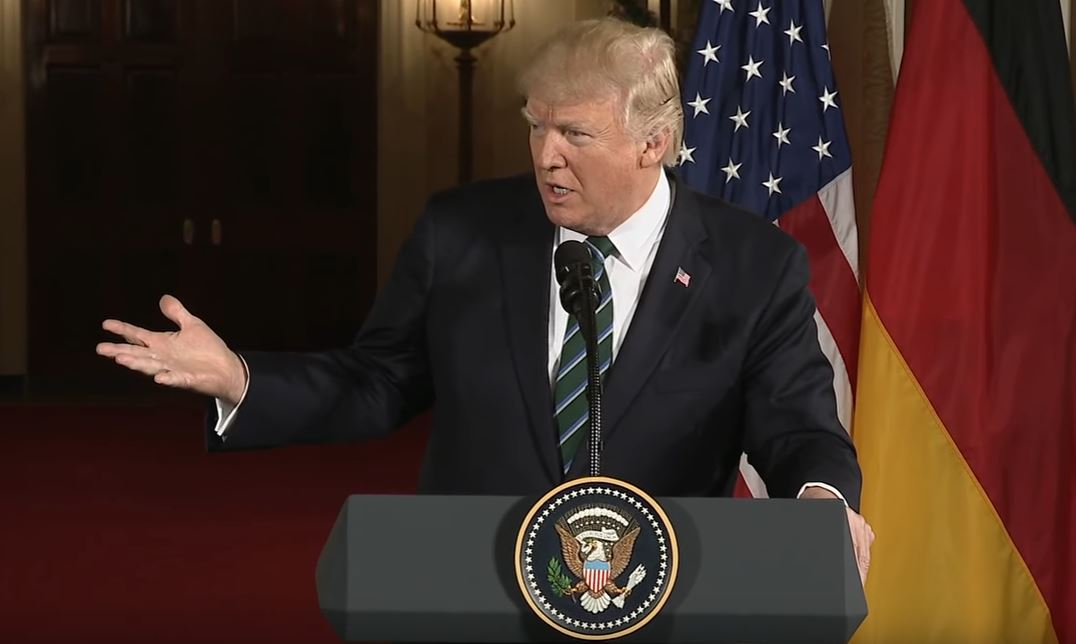
Could This Stock Be “Trump’s Next Big Buy”?
Jim Rickards believes the Trump administration is about to take a direct stake in a tiny $2 stock.
The Trump administration has taken a direct stake in MP Materials, Lithium America, Trilogy Metals, and USA Rare Earth.
Each time, shares sprinted higher. Click here to see why Jim believes this one is next.
SIGNAL 1: Private Credit Firms Are Cutting Off Deferred Interest Loans. Fitch Counts Them as Defaults.
Before software firm Medallia was taken over by creditors, it had been deferring interest payments for roughly four years on debt that grew to $2.8 billion. That deferral option became a popular sweetener in private credit as competition for deals intensified. Now firms are pulling back. Just 13.5% of new private credit loans in Q2 included that provision, down from 25% at year-end.
The problem is what those numbers hide. More than half of all interest deferrals were agreed after the original loan was made. Fitch counts those as defaults. Without them, the industry's rising default rate would look worse than it does. Blackstone did not flag Medallia as a problem loan until early this year. The Medallia takeover was led by Blackstone and included KKR and Apollo. Three of the six firms now sitting inside Nvidia's $500 billion platform.
About 11% of all outstanding private credit loans now carry full or partial deferrals. That is up from 7% in 2021.
The Signal to Watch
A second software company PIK-related takeover above $2 billion in the next 60 days confirms the shadow defaults pattern is continuing. Disclosure of loan modification statistics from any of the three named managers converts the industry-wide framing into specific manager accountability.
SIGNAL 2: US Forces Fired on a Ship Breaking the Iran Blockade.
A US military helicopter fired on a Panama-flagged containership after its crew ignored blockade warnings in the Gulf of Oman. This is the latest enforcement action since the blockade resumed. Three Indian sailors were killed in a June operation. Trump rejected Iran's demand that the US pay war reparations Monday. He countered that Iran should pay reparations to the US instead.
Treasury Secretary Bessent said the Hormuz Strait would become "irrelevant" within two years as pipeline infrastructure develops. He also said US economic pressure pushed Iran's currency into "free fall" with triple-digit inflation. WTI continued its march higher, up over 10% in the last 4 days.
The Signal to Watch
A second casualty incident in the next 30 days converts the blockade from an economic operation to a documented escalation. Any formal negotiation announcement converts the framework in the opposite direction.
SIGNAL 3: The 30-Year Mortgage Hit 6.69%. July Home Sales Fell.
Existing home sales fell 1.7% in July to a seasonally adjusted annual rate of 4.06 million. Economists expected a 1% decline. The median home price of $434,100 is the second-highest on record. The 30-year fixed mortgage averaged 6.69% last week, its fifth consecutive weekly increase from 6.43% at the start of July.
Economists do not expect rates to fall soon. The Iran war and AI buildout spending are both cited as inflation contributors. One homebuyer described "mortgage shell shock" closing in Georgia in April.
Tomorrow's CPI print sits directly under this story. If July inflation runs hot, the fifth straight mortgage rate increase becomes the sixth. That converts the housing slowdown from weather to structural.
The Signal to Watch
A July CPI print above 0.3% month over month confirms rates stay higher longer. An August home sales decline above 3% next month converts the trend from one weak month to a documented slowdown.
The Closest Thing to a Virtual AI Monopoly Wall Street Is Ignoring

A little-known company is building what may be the closest thing to a virtual monopoly the AI era has ever seen.
Only 3...
Yet it beat Apple, Amazon, and the S&P 500 combined...
While paying out $146,000 in total dividends on a 1,000-share stake.
Kevin O'Leary calls what it controls a "unicorn."
Right now, it's trading at a rare discount.
>>>Whitney Tilson reveals the name, completely free.<<<
This ad is sent on behalf of Stansberry Research, 1125 N Charles St, Baltimore, MD 21201. If you would like to optout from receiving offers from Stansberry Research please click here.
Fink named the MBS comparison. The same three managers inside the $500 billion platform led the Medallia takeover this morning's shadow-defaults story named. US forces fired on a ship in the Gulf of Oman. The 30-year mortgage hit 6.69%. Tomorrow's CPI print decides whether September's rate path tightens or holds. Every framework the letter has tracked this month converges on tomorrow's 8:30 a.m. Eastern release. The specific gap between the specific $500 billion platform-launch pricing and the specific credit-cycle conditions the platform launches into is the one measure the tracked window has now given a specific test date.
Nvidia and six Wall Street firms named a new asset class. Private credit named the credit cycle already underway. The Iran blockade named the military escalation layer. Housing named the rate transmission into the real economy.
Tomorrow's CPI print, any first securitized data center bond under the platform, and any second state governor restricting data center construction are the three signals that define whether Fink's comparison defines the next four decades or the next crisis.
