THE SETUP Stocks rallied Monday. Oil fell for a fourth straight day on US-China summit optimism. WTI dropped below $96. Bond yields eased. Chip stocks surged and the Nasdaq led gains. The AI trade roared back to life on the exact day a Fed president said it might be the source of the next inflation problem. Goolsbee spoke in London. The Fed's own statement already changed last week. AMD crossed $1 trillion. Apartment landlords are staring down a debt wall. A major bank is paying for doubting the boom too long. The same trade lifting markets today may be what the Fed targets next. PMD LENS The concentration risk and the rate risk just became the same risk. Goolsbee does not vote this year and called the inflation mix an open question. But the Fed already removed supply-shock language from its official statement. A speech is a view. A statement change is policy moving. PREMIER FEATURE There's a Strategy Behind the Iran War.I know because I've seen the evidence firsthand. On March 2nd — three days after the first missiles hit — I sat across from two U.S. Congressmen in back-to-back private meetings. Those meetings pointed me toward something I spent weeks verifying. The real purpose behind the strikes. The real objective. And the single company at the dead center of all of it. This isn't random. It's a calculated Two-Front Economic War. And there's one company positioned right at the heart of it. See the strategy behind the Iran war — and the company at the center of it The sooner you understand what's really happening — the better positioned you'll be before — Dylan Jovine, Founder, Behind the Markets WHAT MOST WILL MISS - Goolsbee said the old playbook of waiting out oil shocks no longer works. The shocks that were supposed to fade did not fade.
- Warsh's press conference last week stressed domestic spending and business investment. That framing now has a Fed president's name on it.
- Accenture (ACN) rose 6% on a new partnership embedding evaluators inside Anthropic to stress-test its models.
- Coinbase (COIN) opened IPO access to retail investors starting with Oura's debut this week.
IN FOCUS A Fed President Named AI Demand as the New Inflation Driver.Goolsbee said today that inflation may have moved past tariffs and energy into AI demand, specifically "booming investment in artificial intelligence potentially driving prices higher on a broader basis." If that reading is right, the rate response gets more aggressive and more front-loaded. The Fed's language already reflects the shift. After hiking to 3.75-4% last week, it dropped wording attributing inflation to supply shocks. The statement now says only that inflation remains elevated. Warsh's press conference the same day stressed domestic spending and business investment. That is not a coincidence. It is the same demand framing Goolsbee made explicit today. Advanced Micro Devices (AMD) crossed $1 trillion the same morning, the fourth US chipmaker to get there. Goldman flagged what it called over-earning. Profits grew 51% last quarter. AI is currently an 11-point earnings tailwind that Goldman expects to become a drag by 2028. A reversion in chip margins toward historical averages would cut S&P earnings by roughly 10%. The AI spending inflating earnings today is, in Goolsbee's reading, part of what pushes borrowing costs higher tomorrow. The trade holding stocks up is the trade that invites the hike. What Settles This Before October More Fed officials adopting Goolsbee's demand framing is the policy signal to watch. A supply-side concession from the US-China talks this week is the inflation signal. Neither one resolves the concentration already baked into valuations. FROM OUR PARTNERS Buffett, Gates and Bezos Quietly Dumping Stocks—Here's Why 
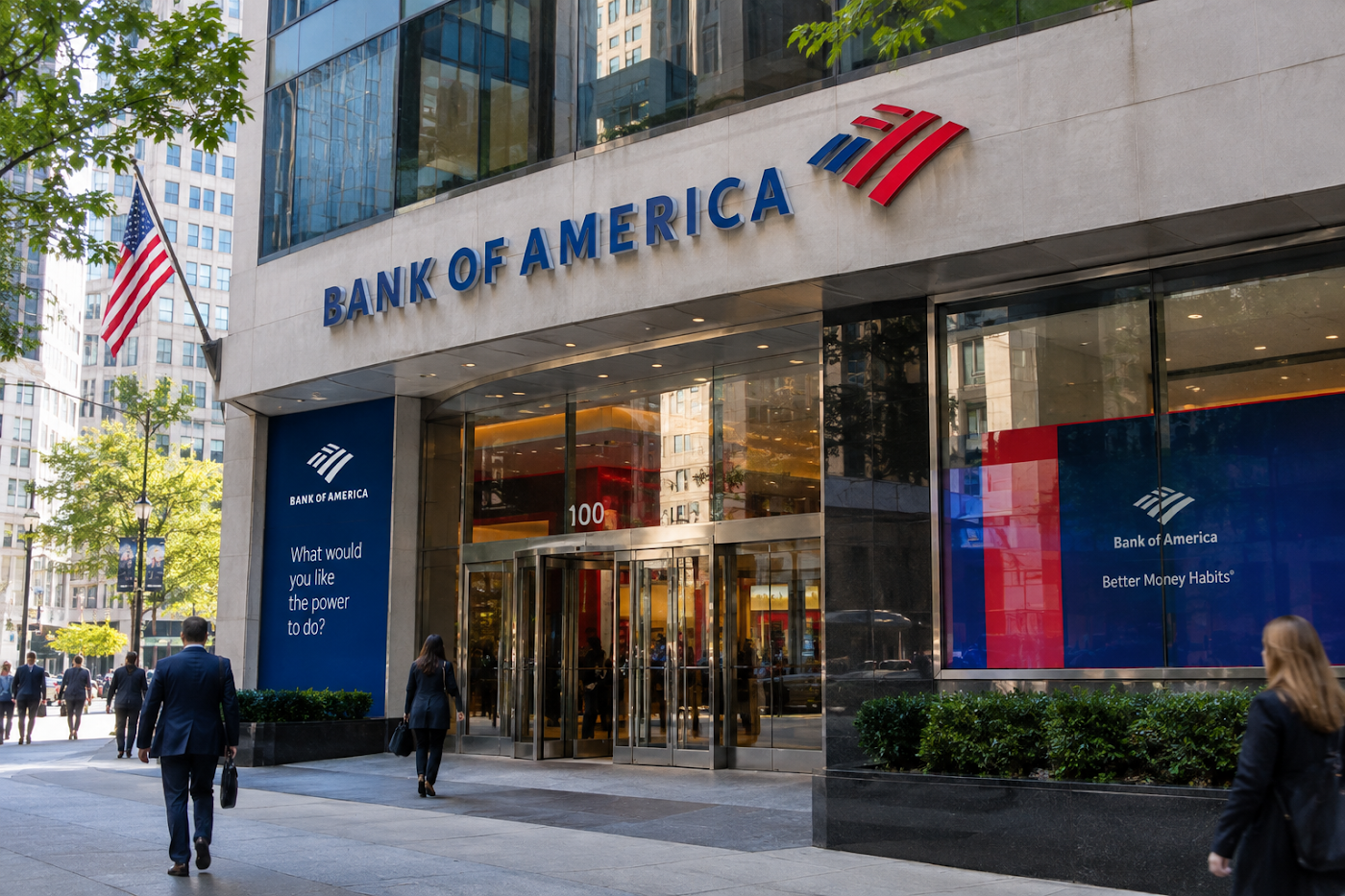
The world's wealthiest individuals are making huge moves with their money. Warren Buffett just liquidated billions of shares. Bill Gates sold 500,000 shares of Microsoft. Jeff Bezos filed to sell Amazon shares worth $4.8 billion. What is going on? One multi-millionaire believes they are preparing for a catastrophic event. But not a crash, bank run, or recession. It’s something we haven’t seen in America for more than a century. For the full story, click here. SIGNALS IN MOTION SIGNAL 1: Apartment Landlords Face a $757 Billion Debt Wall. Blackstone Already Flinched.US apartment landlords owe $1.8 trillion over the next decade. Of that, $757 billion comes due through 2028, more than any other commercial real estate sector. Most of it was locked in near 3% in 2020 and 2021. Refinancing now runs close to 6%. Multifamily delinquencies climbed from 1% to 7.1% in less than three years. Blackstone (BX) defaulted on a $90 million Dallas apartment loan bought at the 2021 peak. A Dallas syndicator racked up $400 million in defaults and shut down. The original bet was simple. Rates fall, rents rise, the math works. Neither leg held. Lenders are no longer extending. They are taking keys back. And Goolsbee just said hikes could turn more front-loaded. The wall landlords are refinancing into is not shrinking. What Blackstone Tells You About the Rest Blackstone is not a small operator that overextended. When the largest private real estate firm defaults on a single building, it confirms the 2021 vintage problem is not isolated. The 3% debt refinancing at 6% is the same trade across millions of units, not a handful of bad deals. SIGNAL 2: Aerospace Suppliers Are Going Back to the 1970s. China's Grip on Rare Earths Is That Tight.Aerospace suppliers are testing turbine-coating formulas that were abandoned decades ago. The reason is straightforward. China controls the rare earths, including yttrium, that the jet-engine supply chain depends on. The National Research Council of Canada is evaluating 1970s-era zirconium-dioxide coatings as a substitute. A former National Security Council official was blunt about the timeline. Even in the best case, the US is years away from reducing this dependency, not months. This lands days before Thursday's Xi-Trump summit, where rare earths are among the sharpest cards Beijing holds. Goolsbee's inflation reframe leaned on supply shocks fading. A jet-engine industry going back fifty years in material science says at least one supply shock has not gone anywhere. It has just gone quiet while the leverage accumulates. Why the Summit Does Not Resolve This The rare-earth dependency is structural. A trade agreement does not build an alternative supply chain. The aerospace industry trying to recreate 1970s formulas is the market's admission that no short-term fix exists. SIGNAL 3: Bank of America Doubted the AI Boom. Now Its Trading Desk Is Paying for It.Bank of America (BAC) missed more than $400 billion of AI-infrastructure bond issuance this year. CEO Brian Moynihan guided for flat third-quarter trading revenue, which sent shares lower. BofA had been skeptical that money-losing AI labs could sustain their capital spending. It eventually reversed, committing to a $520 million OpenAI credit line and a $250 billion infrastructure pledge. It still sits third in US investment-grade issuance behind JPMorgan (JPM) and Morgan Stanley (MS). Apollo estimates AI is now close to 40% of all new bond supply. When one theme is 40% of new supply, it is not a sector. It is the market. A bank that passes on AI issuance is not being selective. It is stepping back from the majority of activity. BofA found this out the expensive way. A more aggressive rate path now raises the cost of the debt pile it is racing to catch up on. The Position That No Longer Exists There was no neutral stance on the AI-debt boom. Skepticism had a price, and BofA's Q3 trading guidance is that number made public. THE PLAYBOOK Trump and Xi meet later this week. Bessent and He Lifeng already met Sunday in New York. Rare earths, AI incident reporting, and chip smuggling are all on the table. Watch whether any supply-side concession comes out of the summit and whether it softens Goolsbee's demand argument. October CPI decides Goldman's December hike base case. Apartment delinquency data next quarter is the first real measure of whether the refinancing wall is starting to crack broadly. CAPITAL DISCIPLINE Goolsbee named the AI buildout as a potential inflation driver on the same day AMD crossed $1 trillion. Landlords are refinancing 2021-era 3% debt at 6%, and Blackstone has already defaulted. Aerospace is testing fifty-year-old formulas because no better alternative to Chinese rare earths exists yet. BofA skipped the boom and its trading revenue reflects it. Two gaps are widening. The rate Goolsbee says may need to rise faster is the same rate AI earnings are now priced against. And the debt wall landlords face gets taller with every front-loaded hike. The summit and the October CPI move both. PMD REPOSITION Goolsbee named the demand. The Fed changed the language. AMD crossed $1 trillion. The apartment wall keeps growing. Aerospace is going backward in time because moving forward requires inputs China controls. BofA discovered there was no sideline. The real question is not whether the AI buildout is real. It is whether the Fed now sees it as something that requires a response. The statement moved. Goolsbee's speech moved. Watch which voting officials say the same thing before October. That is when the framing becomes policy. 3 Market Signals Most Investors Aren't Watching The headline is usually the last place the story shows up.
By the time everyone is talking about a stock… the signals underneath it may have been changing for weeks. • Institutional money moves. • Options activity changes. • Management confidence shifts. • Fundamentals improve, or quietly begin telling a different story. That’s exactly what our analysts found in three stocks where the evidence stopped agreeing with itself.
And in all three cases, the story is still developing. See the 3 Stocks, Get the Free Report → |