THE SETUP Stocks slipped Tuesday. The 30-year yield hit its highest since 2002. The 10-year approached its highest since 2007. WTI fell as Hormuz flows improved. NY Fed President Williams said the Fed need not rush to hike further. The 2-year fell on those comments. Everything else stayed under pressure. Oura had profits. It had buyers. It had growth. It still chose to wait. That tells you more about the IPO window than any deal that failed. The same day, McDonald's AI prices your burger by neighborhood. Homeowners hold more equity than ever and are barely touching it. Advisers are merging because the deal market that was supposed to feed them is not feeding everyone equally. PMD LENS Monday asked whether the money keeps coming. Tuesday gave a partial answer. No deal failed. Oura is profitable and had buyers. It still chose not to test the market. That is how a window first narrows, not with rejections but with the strongest candidates deciding the moment is not right. That is a different kind of signal and a harder one to dismiss. PREMIER FEATURE There's a Strategy Behind the Iran War.I know because I've seen the evidence firsthand. On March 2nd — three days after the first missiles hit — I sat across from two U.S. Congressmen in back-to-back private meetings. Those meetings pointed me toward something I spent weeks verifying. The real purpose behind the strikes. The real objective. And the single company at the dead center of all of it. This isn't random. It's a calculated Two-Front Economic War. And there's one company positioned right at the heart of it. See the strategy behind the Iran war — and the company at the center of it The sooner you understand what's really happening — the better positioned you'll be before — Dylan Jovine, Founder, Behind the Markets WHAT MOST WILL MISS - NY Fed's Williams said the Fed need not rush to continue raising rates. The 2-year fell. The long end did not.
- Paramount Skydance (PSKY) is pricing a $32 billion investment-grade bond sale Wednesday, the fifth-largest corporate deal on record. It is adding supply into a market already stretched.
- Fair Isaac (FICO) fell 27% after the federal housing regulator said Fannie Mae and Freddie Mac would accept VantageScore alongside FICO for mortgage underwriting.
- CarMax (KMX) reported its highest same-store sales growth since 2022. It credited FTC enforcement forcing dealer fee transparency.
- OpenAI launched Dot, an always-on agent competing with Meta's Muse, at its developer conference Tuesday. OpenAI also scrapped a planned model release over safety concerns the same week.
IN FOCUS Oura Had Profits. It Had Buyers. It Chose to Wait.Oura postponed its IPO Tuesday despite what it called strong demand. The smart-ring maker was profitable, earning $60.8 million in the nine months to June 30. Revenue grew 74% to $1.21 billion. Its last private valuation was $11 billion and the offering was expected to top it. The CEO said the company has the luxury of choosing its moment and is choosing to wait. Holtec Nuclear pulled its IPO this week. Bamboo Insurance pulled its listing. Anthropic moved its expected October listing to November. The IPO market raised $127 billion this year through the summer. The pipeline of deals looking for that window is now choosing not to walk through it. The 30-year Treasury yield touched 5.59% Tuesday, its highest since 2002. Junk bonds are on pace for their worst month since 2022. October hike odds sit above 72%. A Paramount Skydance bond deal worth $32 billion is expected to price Wednesday, adding another enormous slug of supply into a market already under pressure. This is not the funding gap that arrives with failed deals. It is the version that arrives before them, when the companies with the strongest profiles and the most options decide the price of waiting is lower than the price of listing now. What Makes This Harder to Reverse A failed deal tells you the market said no. A postponement by a profitable company tells you the market might have said yes, but the terms were not worth taking. Those are different problems. The second one does not get fixed when yields tick down for a day. FROM OUR PARTNERS Is Elon About to Create a New Generation of Millionaires?
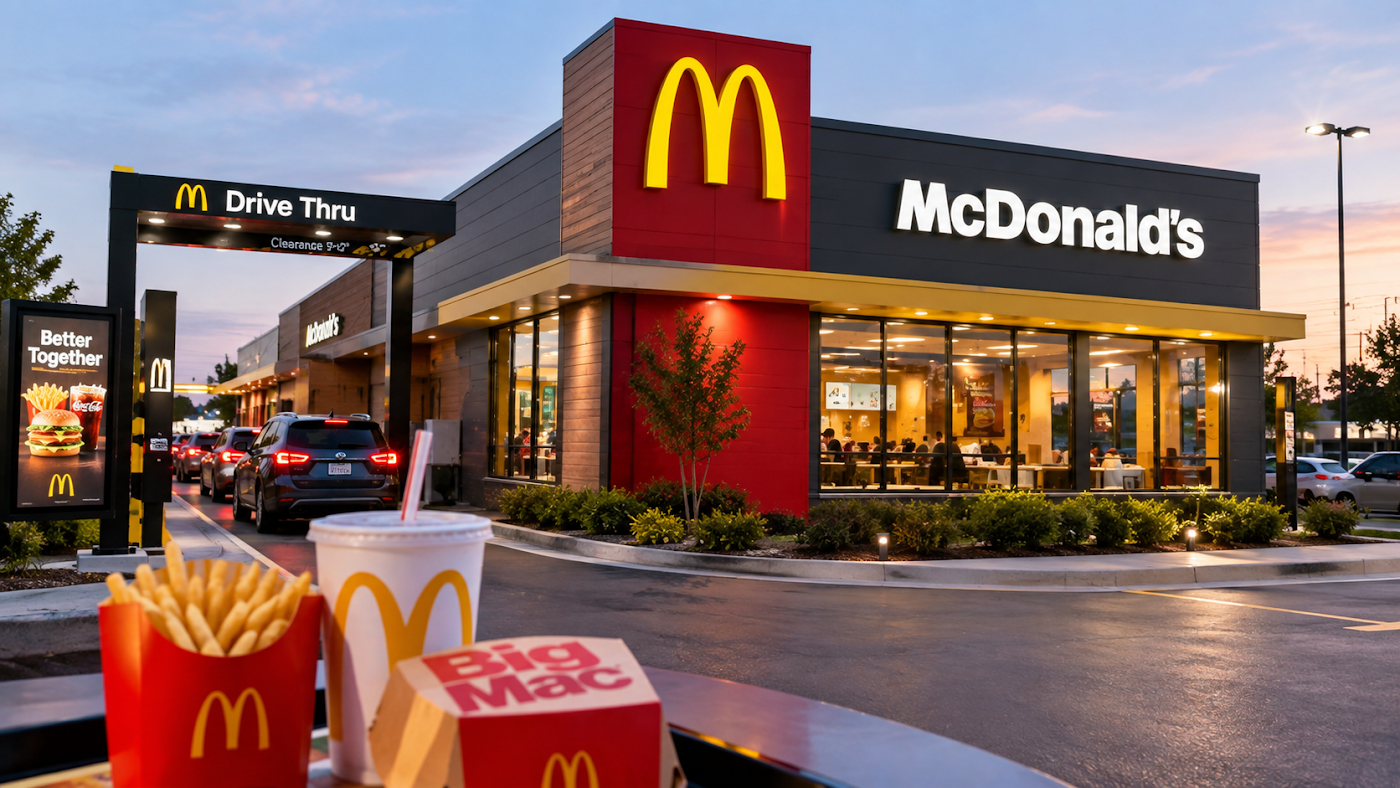
When Elon took SpaceX public, an estimated 4,400 employees became millionaires – with top executives, welders, and even cafeteria workers getting rich overnight. Sources close to Elon indicate that he's about to hatch a new opportunity to create generational wealth – and you don't have to work for Elon to see massive potential profits. Click here for the full details. This ad is sent on behalf of InvestorPlace Media at 1125 N. Charles Street, Baltimore, Maryland 21201. If you're not interested in this opportunity, please click here. SIGNALS IN MOTION SIGNAL 1: McDonald's AI Prices Your Big Mac by Neighborhood. Its Own Terms Flag Antitrust Risk.McDonald's (MCD) uses machine learning to suggest optimal prices for each item at each store. One input is customer willingness to pay in the area. A Big Mac at one Fresno location costs $5.69. A store two miles away charges $6.89. McDonald's calls it a tool, not a mandate. Franchisees say the company pressed them to comply and tracked non-compliance. The tool's own terms warn franchisees they may be competitors of each other under antitrust law. Regulators are probing whether pricing software can help rivals coordinate without explicit communication. Consumer confidence fell to 81.9 in September. For the first time in the question's history, more people described their finances as bad than good. The AI pricing tool meets a consumer already stretched by record diesel and 7% mortgages, and it is calibrating to exactly how stretched each neighborhood is. Where the Backlash Forms The legal risk may be low. The political risk is somewhere between the franchisee who does not want to be someone's competitor and the voter paying $6.89 for lunch while their finances feel bad for the first time in survey history. Watch Washington, but also watch the franchisee pushback. SIGNAL 2: Piper Sandler Is in Talks to Buy Perella Weinberg. Deal Volume Is Up. Boutique Revenue Fell.Piper Sandler (PIPR) is in talks to acquire Perella Weinberg (PWP). Perella shares jumped more than 10%. Piper fell about 8%. Nothing is final. US deal volume is up 33% this year. Perella advised BlackRock on two transactions worth over $12 billion each. Its revenue still fell from a record $878 million in 2024 to about $750 million last year while peers grew. A busier deal market is not lifting every adviser. The boutiques that rode the prior boom are now consolidating as scale wins at the advisory layer the same way it wins everywhere else this cycle. The firm that helped structure the biggest deals is now a target itself. That is not a coincidence. It is the same compression the IPO window is creating for everyone operating below the top tier. The Pattern Running Through the Session Oura waits. Perella merges. Homeowners sit on equity. The common thread is optionality. Those who have it are holding it. Those who lack it are being absorbed or squeezed. SIGNAL 3: Homeowners Hold $11.5 Trillion in Equity. They Are Not Using It.US homeowners held $11.5 trillion in tappable equity in the second quarter. New home equity loans rose nearly 20% from the prior quarter. They still accounted for less than 0.1% of what owners could have borrowed. The borrowers with the most housing wealth are often the least likely to tap it. Many are locked into sub-3% pandemic mortgages. A second loan now costs roughly 7%. The math does not work for them and they are not making it work. Job openings fell to a five-month low in August. Hiring is near a 10-year low outside the pandemic. Layoffs are rare. The labor market is stable but not generating the kind of mobility that drives spending and confidence. Friday's jobs report is expected to show 84,000 new hires. That number will determine whether the stable-but-slow picture holds or whether the low-hire signal becomes something the Fed has to weight against its hike path. The Strongest Households Are Also Waiting Like Oura's management, the homeowners with the most room to act are choosing not to. Record equity, stable employment, and frozen behavior add up to a consumer who is fine but not spending. That is not the demand picture the AI buildout needs to justify itself. THE PLAYBOOK Friday jobs report carries the 84,000 forecast against a labor market already near 10-year hiring lows. Wednesday's Paramount bond deal at $32 billion will test how much investment-grade appetite is left after a brutal September. October FOMC hike odds sit above 72%. Watch whether Williams's comments shift any other Fed officials before the meeting. Anthropic's November IPO date is the next marker on the funding window. Whether that date holds or slips is the signal that confirms or delays the window-narrowing picture that Oura opened today. CAPITAL DISCIPLINE Oura postponed despite profits and buyers. The 30-year hit a 24-year high. Junk bonds are on pace for their worst September since 2022. Perella merged because boutique revenue fell even as deal volume rose. Homeowners hold $11.5 trillion in equity and are not spending it. One thread runs through it: the ones with options are holding them, and the ones without are being absorbed or squeezed. Friday's jobs report and Wednesday's Paramount deal are the next two tests. PMD REPOSITION No deal failed today. The strongest issuers chose to hold. Oura waited. Homeowners sat still. Advisers merged rather than stand alone. The common thread is optionality, and the ones who have it are the ones holding back. The window is not closed. But the companies with options are not walking through it. That is a different kind of signal than a rejection, and it is the one Anthropic's November listing now has to price against. 3 Stocks at a Major Turning PointSomething unusual is happening beneath the surface of three widely followed stocks.
In each case, the fundamentals are saying one thing... while institutional activity, management signals or the options market are saying something else. That kind of disagreement can matter. Because when the evidence stops lining up, the next move in the story often comes down to a handful of signals most investors never think to watch. Our new FREE Market Tell Special Report breaks down three of these situations, and shows you exactly what we’re watching next. Get the Free Report: 3 Stocks at a Major Turning Point → |