
THE SETUP Stocks bounced back hard today. The Fed hiked yesterday for the first time in three years. Markets sold off, then thought better of it. The 10-year yield pulled back from 5%, and WTI eased after spiking earlier this week. The recovery looks calmer than it feels. The SEC rewired how equity trades without passing a law. The AI buildout's biggest infrastructure company raised $6 billion into rising rates. Nobody agrees how bad private credit's losses are. And GM is building missiles now. Everything below. PMD LENS Congress failed to pass crypto market-structure legislation Monday. The SEC cleared tokenized stocks by exemption Wednesday. Two days. No law required. The how of American equity trading just changed by regulatory fiat rather than statute. PREMIER FEATURE Why Nuclear Stocks May Be Mispriced Right NowFor years, nuclear energy was ignored by investors — but that’s quickly changing. Rising power demand, grid reliability concerns, and growing government commitments are pushing nuclear back into focus. Yet many nuclear stocks are still priced as if nothing has shifted. With uranium supply tightening and new reactor technologies gaining traction, a re-rating may be underway. Our analysts reveal the opportunity in a FREE report: 7 Top Nuclear Stocks to Buy Now. Get the full list free before it’s priced in. WHAT MOST WILL MISS - Generac (GNRC) surged more than 20% on a $2.4 billion Amazon generator deal.
- Lockheed Martin (LMT) CEO confirmed 2,000 Patriot missiles shipping next year.
- Mortgage rates hit 6.95% this week, approaching 7% for the first time since early 2025.
- Securitize (SCRZ) jumped 22% on the tokenization decision.
IN FOCUS The SEC Rewired Equity Trading. Congress Didn't Have to.The Securities and Exchange Commission cleared the path for tokenized stocks in the US. Tokens that mirror listed shares. Full shareholder rights, dividends, and proxy votes included. Effective immediately. Five years. No agency approval needed to start trading. The CLARITY Act failed in the Senate Monday. The SEC acted Wednesday. Two days later. Using its own exemption authority. NYSE and Nasdaq are already building platforms. There is one catch that matters. Before any venue can offer a third-party token of a company's shares, it must give that company 30 days notice. If the issuer says no, the venue stops. The tokenizers won their venues. The corporate issuer kept a veto. Citadel Securities objected before the ink dried. The firm wants a formal comment process first. That is the incumbent market-maker fighting a change that routes around it. The exemption model is exactly what let the SEC move fast. It is exactly what Citadel is trying to slow down. Control Split. It Didn't Transfer. The veto is the whole story. A public company has never been able to say who trades its shares or how. Now it can block a token of its own float. The tokenizers got the venues, but the issuer got a right it never had, and any company that uses it is asserting control over its stock that the public market never granted. This didn't hand equity trading to the crypto venues. It handed issuers a new lever and let the venues build around it. FROM OUR PARTNERS The REAL Reason Trump Is Invading Iran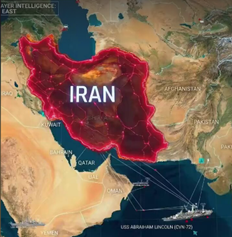
For a moment… Forget about Trump’s ties to Israel. Forget about reports of Iran’s nuclear program. Because my research has led me to believe we’re risking World War 3 with Iran for a completely different reason. Click here to find out what it is. If you have even a single dollar invested in the U.S. stock market, this is going to directly impact you. Discover the reason here. SIGNALS IN MOTION SIGNAL 1: CoreWeave Raised $6 Billion Into a Rising Rate Environment.CoreWeave (CRWV) raised $3 billion in convertible debt plus a $2.92 billion stock sale. One morning. The stock fell more than 3% on the dilution. CoreWeave carries $104 billion in backlog and 4.2 gigawatts of contracted power. A convertible bond is a bet the stock climbs enough to make conversion cheap. Issuing one the day after a hawkish hike is issuing into a headwind. OpenAI is reportedly raising at a $1.2 trillion valuation in the same rate environment. The demand is real. The backlog is real. A company raising $6 billion the morning after the Fed turns hawkish is racing its own financing cost. The Buildout Is Racing Its Own Cost of Capital Raising converts and equity in the same morning is what capital hunger looks like when capital just got more expensive. The convert is a bet the stock outruns the coupon; issuing it into a hawkish dot plot is betting against the rate the Fed just told you is going higher. The demand is real, but a company that needs $6 billion the day after the hike is running from a financing cost that's chasing it faster than the backlog can grow. The AI trade was priced as a demand story. This is the supply-of-capital side, and it's tightening. SIGNAL 2: Private Credit's Default Rate Is 1%, 6%, or 19%.Fitch puts private credit's default rate at a record 6.3%. Houlihan Lokey weighs by loan size and says below 1%. Pimco's shadow rate for retail business development companies sits at 19%, up from 14% in 2022. Same $1.8 trillion market. Three answers spanning a twentyfold range. No industry-wide dataset exists. No consensus on what counts as distress. Pimco is building its own gauge because the public numbers are not usable. ING puts the systemic threshold at 12 to 15%. Pimco's shadow reading is already past that for the retail slice. Retail investors are pulling money without knowing how bad it actually is. When the honest answer runs from nearly nothing to past the systemic line, the uncertainty becomes the risk. The Missing Number Is the Risk A market survives stress. It doesn't easily survive not knowing how much it's under. An allocator marking a book, or a retail investor deciding to redeem, is working from a default rate that could be nearly nothing or past the systemic line, with no way to tell which. Opacity was fine while the asset class only grew. Now that money is leaving, the data void stops being an inconvenience and becomes the thing that turns an orderly exit into a run. SIGNAL 3: GM Is Building Missile Parts. Three Weeks, Not Months.General Motors (GM) is now supplying housing components for Lockheed's Patriot interceptors. First batch delivered in three weeks. Parts that normally take months. The Pentagon ordered Lockheed to more than triple Patriot output to 2,000-plus missiles a year by 2030. GM expects $700 million in defense revenue this year at double-digit margins. Lockheed's CEO confirmed at a conference Thursday that production is running ahead of schedule. Two thousand missiles next year. When a war outlasts the arsenal, the Pentagon reaches into idle auto capacity. A carmaker's metal-stamping expertise compresses a defense timeline in ways the primes cannot. WTI touched $109 earlier this week and sits at $101 today. The same conflict emptying the stockpile is driving the oil shock. Defense Just Became a Dual-Use Revenue Line The model is already spreading; the Pentagon is enlisting automakers because the primes can't surge. That makes munitions a new margin stream for idle industrial capacity, GM's $700 million at double-digit margins is real money in a dead car market, and it's the same reshore the bottleneck reflex the window tracked through chips, oil, and power, now reaching weapons. The war emptying the arsenal is the same one driving oil to $109, and the fix for both is to pull production onshore wherever the capacity already sits. CAPITAL DISCIPLINE The SEC answered the equity-structure question by exemption rather than law. CoreWeave showed the AI buildout's financing cost turning against it the morning after the hike. Private credit showed a market that cannot measure its own losses as investors exit. GM showed the war reaching past oil into the arsenal. Every framework tracked this week converges on the gap between what the regulatory machinery can authorize without Congress and what the legislative process has repeatedly failed to pass. That gap sits alongside the gap between CoreWeave's $104 billion backlog and the rising cost of funding it. The issuer veto window and the dot plot's next hike are both running now. PMD REPOSITION The SEC answered the market-structure question without a law. CoreWeave answered the capital-cost question with a $6 billion raise into a headwind. Private credit answered the transparency question with a range that spans twentyfold. GM answered the arsenal question with a three-week delivery. The issuer veto window, CoreWeave's convert pricing, and any new private credit disclosure standard are the three signals that define whether tokenized equity trading holds, whether the AI buildout's financing cost becomes structural, and whether the data void gets addressed before the withdrawal pressure becomes something worse. FREE FINANCIALMARKETS.COM ALERTS The Next Market Move Could Start With One Alert Get breaking market developments, trade ideas, analyst signals and upcoming catalysts sent directly to your phone. Markets move quickly. Now your information can too. START GETTING FREE ALERTS → |