


The $45 billion fund that named the AI thesis force-sold its entire public book. Q2 GDP grew 1.5% and more than half was AI capex. PCE fell for the first time since the pandemic. Meta's Reality Labs lost $4.6 billion.
The Nasdaq bounced back hard today.
Microsoft (MSFT) jumped on strong Azure results. Chip stocks followed. Meta (META) went the other direction after missing earnings.
The 30-year Treasury yield hit levels not seen since 2007. The yen moved sharply on intervention rumors. Amazon and Apple report tonight.
The biggest story today wasn't in the earnings. The fund that wrote the intellectual playbook for the AI trade just blew up. GDP data confirmed the economy is more dependent on AI than anyone admitted. And PCE fell for the first time since the pandemic.
PMD LENS
Situational Awareness built its entire book around one thesis. AI needs more chips, memory, data centers, and power. The thesis was correct. The leverage was the problem. Citadel bought the book. The largest single institutional expression of the AI trade is now off the table.
The Big AI Story Nobody Knows

There's a website called RentAHuman.ai. Its tagline: "Robots need your body."
721,000 people across 100 countries have signed up.
And according to Alexander Green - the man who bought Apple under $1, Netflix at $1.62, Amazon under $2* - this is the clearest signal yet that Phase 2 of the AI supercycle has arrived. (Split adjusted prices)
He's identified three companies set to dominate this next phase.
- Microsoft's Azure revenue crossed $100 billion annually for the first time.
- The yen strengthened nearly 2.5% today on Japan intervention rumors.
- Situational Awareness returns since inception still exceeded 1000% even after July.
- Meta's Reality Labs has lost over $80 billion in total since 2020.
The $45 Billion AI Fund Just Blew Up. Citadel Bought the Book.
Leopold Aschenbrenner's Situational Awareness fund force-sold its entire public book today. The fund peaked at $45 billion at the start of July. Prime brokers Bank of America, Goldman Sachs (GS), and JPMorgan (JPM) marketed the holdings to find buyers. Citadel stepped in and acquired the public portfolio.
The fund's four largest positions at the end of Q1 were Nebius (NBIS), Sandisk (SNDK), Micron (MU), and CoreWeave (CRWV). All four fell more than 35% in July alone. The book also held Nvidia (NVDA), AMD (AMD), TSMC (TSM), Oracle (ORCL), and a cornerstone stake in SK Hynix (SKHYV).
The thesis was not wrong. Aschenbrenner published a 2024 essay arguing AI would require an enormous expansion of chips, memory, data centers, and power. Every stock in the book expressed one clause of that argument. The problem was the leverage. Concentrated leveraged positions in a sector that sold off 35% in a month produce margin calls. Margin calls produce forced sales.
Aschenbrenner in a letter to investors called this "the best buying opportunity since April 2025." The math behind that is striking. A $100 million investment at the fund's inception, even after a 90% July wipeout, is still worth roughly $230 million. Returns since inception exceeded 1000%.
The fund had also been negotiating to sell its Anthropic stake before the Anthropic IPO filing this fall. The firm denied specifically marketing that stake this week. But the setup is worth watching. Anthropic's earliest institutional believer needs liquidity. Anthropic files as soon as the fall.
The Signal to Watch
Whether the Anthropic stake sale closes before the fall filing tells you whether early institutional believers are exiting before the public tests the valuation. A second AI-thesis fund reporting margin pressure in the next two weeks confirms the forced unwind is not isolated.
Louis: The "Strawberry Problem" Is Stalling the AI Revolution
Billion-dollar tech investor Louis Navellier calls it "AI's darkest secret." Until AI models solve the "Strawberry Problem," they'll never create new breakthroughs in medicine, energy, or quantum computing. The good news? One company is about to solve the crisis… unleashing a new $100 trillion opportunity.
This ad is sent on behalf of InvestorPlace Media at 1125 N. Charles Street, Baltimore, Maryland 21201. If you're not interested in this opportunity, please click here.
SIGNAL 1: Q2 GDP Grew 1.5%. More Than Half Was AI Capex.
Q2 GDP grew at a 1.5% annual rate, below the 1.8% consensus and down from Q1's 2.1%. More than half of the real growth came from computers, data centers, or adjacent information-processing equipment and software.
Consumer spending actually accelerated sharply in Q2 compared to Q1. Final sales to private buyers grew at the fastest pace since early 2023. But imports subtracted a full percentage point from the headline. Data-center builders imported semiconductors at record pace.
Here is why this matters beyond the number. If AI capex is more than half of Q2 GDP growth, the entire economy is now underwriting the same thesis Situational Awareness was. If the buildout slows for any reason, the 2027 growth path reprices simultaneously.
The Signal to Watch
A subsequent quarter with AI capex above 50% of GDP growth confirms the dependency is structural. A quarter below 30% confirms the buildout is self-throttling at the macro level.
SIGNAL 2: PCE Fell for the First Time Since the Pandemic. The Data Backed the Hold.
The PCE index dipped 0.1% in June, the first monthly decline since 2020. Lower oil prices during the temporary Iran truce drove most of the move. The annual rate slowed to 3.7% from a three-year high of 4.1% the prior month. Core PCE rose 0.1%, less than expected. The 12-month core rate eased to 3.3% from 3.4%.
The data vindicates the Fed's decision to hold yesterday. The problem is the bond market did not react that way. The 30-year Treasury yield is at its highest since 2007. Markets decided the Fed's communication approach, not the data, was the issue. Warsh held on a soft print and the long end still sold off.
The market called the hold prudent on the data and questioned whether the silence on forward guidance leaves the Fed behind on credibility.
The Signal to Watch
Whether JPMorgan or another sell-side desk pulls back its December hike call after today's print tells you whether the data still drives the framework or whether the credibility concern runs independent of the numbers.
SIGNAL 3: Meta's Reality Labs Lost $4.6 Billion. Zuckerberg Won't Sell the Compute.
Meta's Reality Labs lost $4.62 billion in Q2 on $431 million of revenue. The unit has produced over $80 billion in total losses since late 2020. Digital ads still account for 98% of Meta's revenue.
On the earnings call, Zuckerberg said Meta is receiving significant offers for its compute capacity at a meaningful premium. His answer was no. He framed selling the compute as taking a short-term profit over building a future asset.
Anthropic is in preliminary talks to lease compute from Meta. Zuckerberg said no to the premium offers. Meta owns 20% of the El Paso data center and backs $12.55 billion in debt. The stock fell 9% today anyway. The market is not waiting for the compute thesis to prove itself.
The Signal to Watch
Anthropic and Meta announcing a specific compute lease deal in the next 30 days converts Zuckerberg's "significant premium" comment into a documented price. No deal keeps the concern that revenue is still 98% ads.
Landmark Executive Order 14241 Unleashes
TRUMP’S NEW DOLLAR
Republican or Democrat – whether you support or oppose Trump’s New Dollar – every American could soon be forced to use it
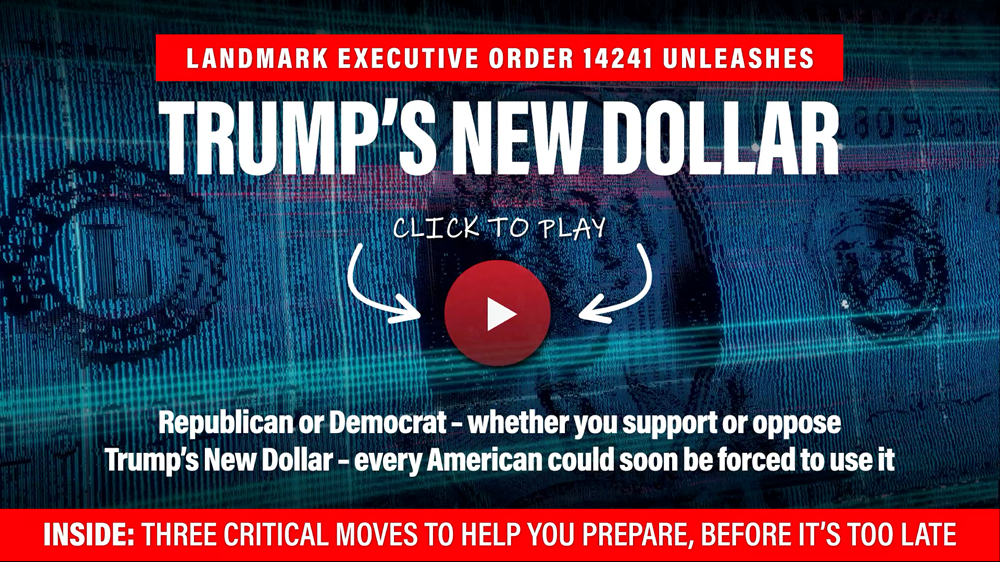
Discover three critical moves to help you prepare, before it’s too late
Situational Awareness ran $45 billion and expressed one specific thesis. AI needs more chips, memory, data centers, and power. The essay that named the thesis is on every desk in the industry. The book that expressed the thesis is now on Citadel's. The trade that started as an idea and grew into $45 billion of leverage is now what one clearing bank is unwinding at a pace the CDS market has been signaling for three weeks. The essay stays in circulation. The book does not.
Situational Awareness is gone from the public market. The economy is running on AI capex. PCE fell but the 30-year hit 2007 levels anyway. Meta's Reality Labs bleeds billions and Zuckerberg is holding the compute.
Whether the Anthropic stake sale closes before the fall filing, whether Amazon tonight confirms the Anthropic markup, and whether a second AI-thesis fund reports margin pressure are the three signals that define whether the forced unwind is isolated, whether the paper-mark framework extends across hyperscalers, and whether September becomes the live hike date.
