

Both Hormuz and the Saudi bypass route came under threat as Brent topped $100. The BEA will quietly cut the Fed's favorite inflation number in September. Alphabet's $205 billion capex plan crushed the platforms and lifted the chipmakers. And private credit now sits under nearly every AI deal.
Five trading days. Six threads drove the tape.
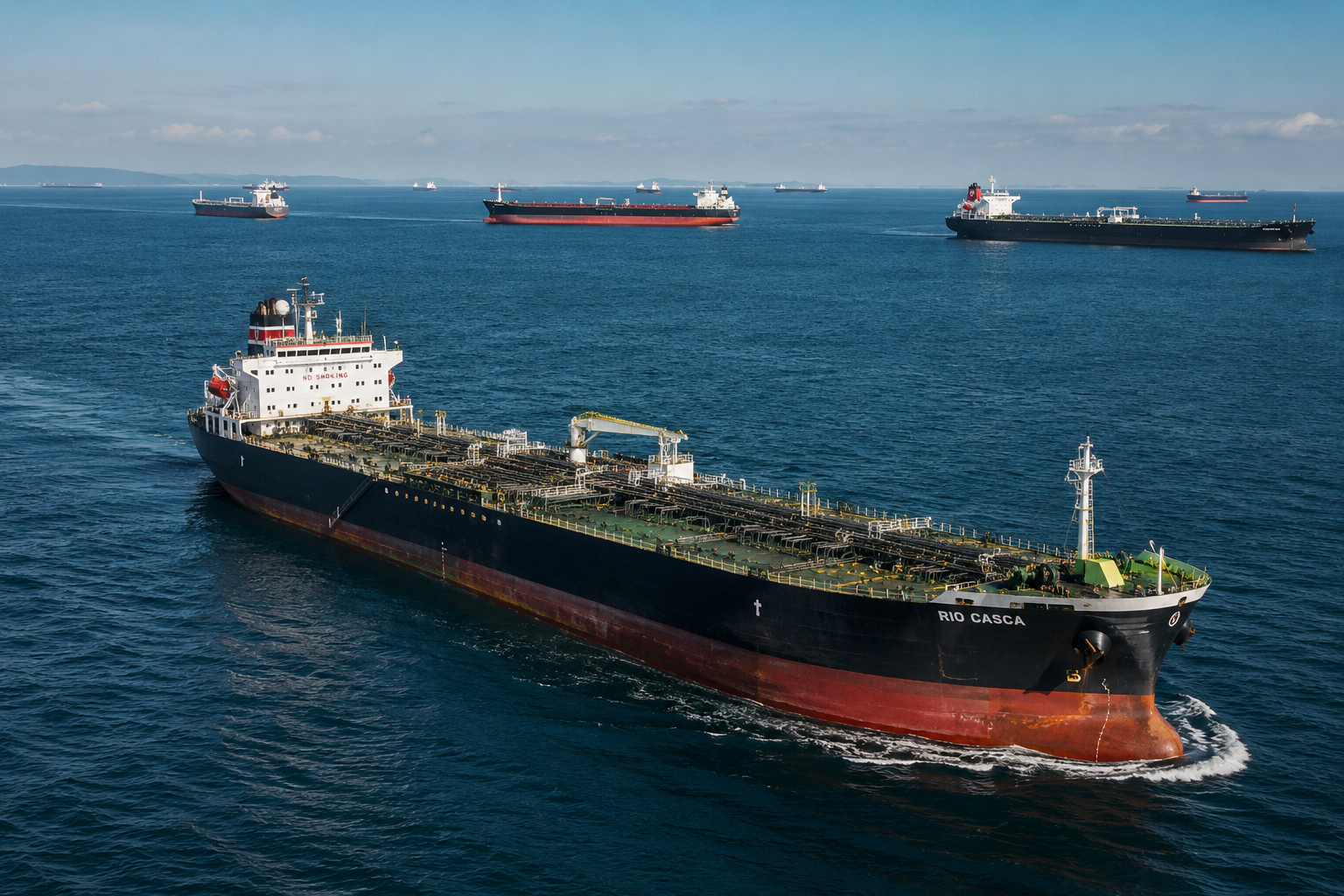
The week opened with relief. Oil spiked above $90 on a ninth night of US-Iran strikes. It gave that back on hopeful talk of a deal. The relief did not last. By Thursday, Houthi attacks put Hormuz and Saudi Arabia's only working bypass route under threat at the same time. Brent crossed $100. Gas passed four dollars a gallon.
The Fed picked up its own quiet surprise. Its favorite inflation gauge will drop 0.2 points in September, right between two live Fed meetings.
Then Wednesday split the AI trade in two. Alphabet (GOOGL) raised its spending plan to $205 billion. The stock fell hard. Tesla (TSLA) and Amazon (AMZN) sold off too, without even reporting yet. Chipmakers and server builders did the opposite. Intel (INTC) and Super Micro (SMCI) jumped. One number, two very different reactions.
Under all of it, private credit keeps growing. Chip loans, power deals, and lease terms now sit behind nearly every AI headline.
Here are the six threads that mattered most.
There's a Strategy Behind the Iran War.
I know because I've seen the evidence firsthand.
On March 2nd — three days after the first missiles hit — I sat across from two U.S. Congressmen in back-to-back private meetings.
Those meetings pointed me toward something I spent weeks verifying.
The real purpose behind the strikes. The real objective. And the single company at the dead center of all of it.
This isn't random. It's a calculated Two-Front Economic War.
And there's one company positioned right at the heart of it.
See the strategy behind the Iran war — and the company at the center of it
The sooner you understand what's really happening — the better positioned you'll be before August 12th.
— Dylan Jovine, Founder, Behind the Markets
Oil Crossed $100 as Both Chokepoints Came Under Threat
Monday brought a scare and a reprieve. US strikes on Iran hit a ninth night. Brent briefly topped $90. It reversed to $87.77 after Iran signaled openness to talks. That reprieve did not hold.
By midweek, Houthi forces threatened Saudi Arabia's only working bypass route. That route had carried about four million barrels a day since Hormuz first shut. Saudi oil loadings on it fell 36 percent the day the threat landed. By Thursday, Houthi attacks hit both Hormuz and Saudi Arabia's only working bypass route. Both chokepoints came under threat at once. Brent crossed $100. WTI hit $92. Gas passed four dollars a gallon.
Energy Aspects has warned a longer closure could push oil toward $100 or higher. Goldman (GS) has floated $120 in a full shutdown. Both numbers look far less extreme than they did a week ago.
The Signal
Any ceasefire deal before the Fed meets Tuesday and Wednesday. That would reverse fifteen to twenty dollars of the spike. It would hand Chair Warsh a very different inflation picture.
The Fed Quietly Got Its Cover to Hold
The Bureau of Economic Analysis will change how it prices software, investment fees, and legal services this September. The fix lowers core PCE by 0.2 points. Core PCE stood at 3.4 percent in May.
The timing matters more than the number. The Fed votes July 28 and 29. June PCE prints under the old rule on July 30. The new rule starts September 30, right between two live Fed meetings. The committee will spend the fall arguing over a number that already carries a built in discount.
Chair Warsh has said he is not chasing the second decimal. He watches the number to the left of the decimal point. That part stays put. The part getting repriced sits just to the right of it.
The Signal
Any Fed official citing the BEA change out loud at the July 29 press conference. That would turn a technical footnote into part of the public debate over how real the progress on inflation is.
The Man Who Called Nvidia Before It Soared 1,000% Issues New Elon Musk BUY Alert

Luke Lango was ranked America's #1 stock picker in 2020. He was mentored by two hedge fund billionaires from the Soros network and trained at Caltech. His readers have had the chance to see gains as high as AMD +8,500%... Nvidia +5,000%... Tesla +3,500%... Palantir +1,000%... and Apple +890%. Now he's releasing his next big pick.
This ad is sent on behalf of InvestorPlace Media at 1125 N. Charles Street, Baltimore, Maryland 21201. If you're not interested in this opportunity, please click here.
Alphabet's Capex Split the AI Trade Into Two Lanes
Oracle's (ORCL) bond market gave the first warning. Its credit insurance cost hit its highest level since 2008 on Monday. Lenders were starting to worry about Oracle's heavy reliance on one AI customer.
Wednesday made the split official. Alphabet raised its 2026 spending plan to $205 billion. The stock fell more than 7 percent. Tesla dropped 14 percent after burning cash for the first time in two years. Amazon and Microsoft (MSFT) fell too, before either even reported.
The other side of the trade went up. Super Micro jumped 24 percent on a surprise doubling of its profit guidance and $60 billion in fresh orders. Intel jumped 10 percent after hours on reports Apple (AAPL) may have it build future chips. Samsung and SK Hynix gained in Seoul.
Every dollar leaving a platform company's balance sheet is landing on a chipmaker's income statement. The market priced both sides in one week.
The Signal
Microsoft, Meta, and Amazon earnings next week. Two or more raising capex the way Alphabet did extends the platform selloff. Any one of them slowing down makes it the first hyperscaler to flinch.
The AI Funding Web Got Bigger and More Tangled
Private credit is doing more of the heavy lifting behind AI than most people realize. Apollo (APO), Blackstone (BX), and Broadcom (AVGO) closed a $35 billion chip financing deal in June. It is the largest private credit deal on record. Broadcom backs most of that debt itself, without it ever touching Broadcom's own balance sheet.
Anthropic's compute plans rest partly on a lease with a 90 day cancel clause tied to Elon Musk personally. Meta's push into selling spare computing power knocked CoreWeave (CRWV) and Nebius (NBIS) down 15 percent in one week. Alphabet then reversed that move three weeks later by leaning on both companies again.
Add in a $5.34 billion power deal from Williams (WMB), Blackstone, Apollo, and KKR (KKR). Insurance money is now funding AI buildouts too.
The Signal
Any single backer, like Broadcom, showing up behind more than one major AI deal. A downgrade in one place could then ripple through several deals at once.
On September 8th, a powerful new law signed by President Trump
will trigger a radical shift in America’s money system...
When a small group of private companies — not the Fed — will perform a major mint of a new kind of money.
And those who act before this new system fully kicks in could see gains as high as 40X by 2032.
But those who fail to prepare will be blindsided by this sea change to the U.S. dollar.
Go here now for the details — before the September 8th mint hits the market.
Washington Opened Three New Fronts on AI
The Fed asked bank chiefs to worry about Anthropic's most powerful model back in April. Three months later, the Fed itself still cannot access that same model. Treasury Secretary Bessent went a different way. He threatened sanctions on Chinese AI labs he says are copying American models. The European Union fined Google a billion dollars this week under its digital rules. The US trade office called that fine outright theft.
Pushback against new data centers is turning into real policy too. Protesters held 142 events across 42 states last weekend. New York and New Jersey passed new restrictions just this month.
Every one of these fights lands ahead of Anthropic's planned October listing.
The Signal
A formal sanctions order naming a specific Chinese company before September talks. Until a name appears, this is pressure, not policy.
Cracks Showed Up Beneath the AI Boom
Not every number this week supported the AI story. IBM's (IBM) own clients are shifting budgets toward AI hardware and away from its own software. Prices there are rising 30 percent a quarter. Hedge funds sold US tech at the fastest pace on record. Retail investors are rotating the same way. Margin debt hit a record $1.5 trillion in June.
Albertsons (ACI) fell 22 percent after cutting its yearly guidance by more than 20 percent. That is a sign four dollar gas is already eating into grocery budgets. Mortgage rates are heading toward 7 percent.
Not everything cracked. Honeywell (HON) beat expectations on old fashioned industrial demand that has nothing to do with AI. A second economy is still running quietly alongside the AI one.
The Signal
A second grocery or staples company cutting guidance the way Albertsons did. That would confirm the household squeeze is spreading, not staying isolated to one name.
Landmark Executive Order 14241 Unleashes
TRUMP’S NEW DOLLAR
Republican or Democrat – whether you support or oppose Trump’s New Dollar – every American could soon be forced to use it
Discover three critical moves to help you prepare, before it’s too late
Six threads, one story underneath them. Oil crossed $100 as both major chokepoints came under threat at once. The Fed picked up a quiet inflation discount that lands between two live meetings. Alphabet's spending plan split the AI trade into winners and losers in one session. Private credit keeps building a more tangled web under nearly every AI deal. Washington opened three new fronts on AI policy. And real cracks showed up in consumer spending and budgets. One old economy name still beat expectations quietly.
These are not six separate stories. Oil is shaping the inflation picture the Fed walks into Tuesday. That picture sits against a data revision already built to look better in the fall. Capital markets are sorting AI winners from losers in real time. Private credit ties it all together underneath. July 28 and 29 is where all six threads meet.
