

Global yields hit multi-decade highs, then one Fed governor reversed a month of selloff in an afternoon. Gold fell alongside bonds. Oil broke out and jet fuel hit $140. Broadcom joined Nvidia in financing its own customers. Friday's jobs report gave the hawks 162,000 reasons.
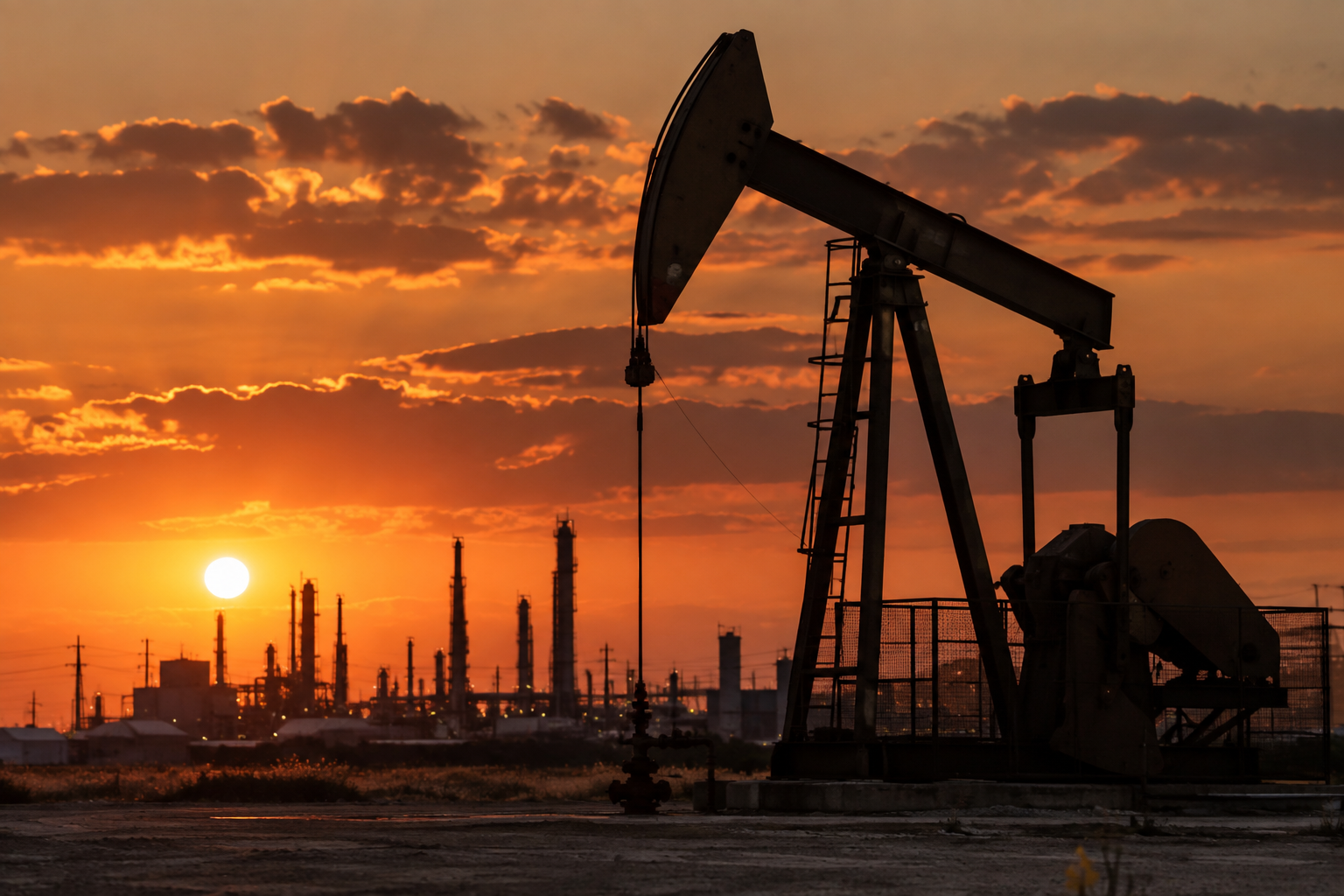
Five trading days. Yields climbed to multi-decade highs. Oil broke out. Then one Fed governor changed the story in a single interview.
The week opened with the bond market certain of a September hike. Japan's 10-year hit 3% for the first time since 1996. UK borrowing costs reached 2008 levels. The US 10-year touched a 20-month peak. Then on Thursday, Governor Waller said hold, and hike odds fell 16 points in an afternoon.
That reversal is the week in one move. The market was sure of one outcome. It turned out the Fed never agreed on it.
Did Trump Draw a Red Line Around This Mystery Stock?
|
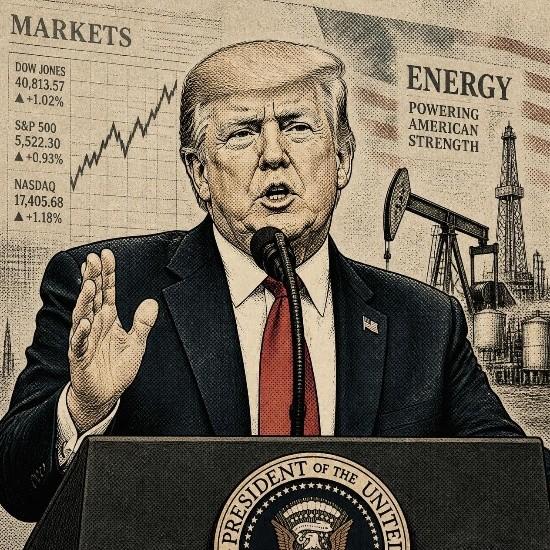
When a major U.S. trading partner targeted one American energy company’s profits, Trump publicly warned it was making a “big mistake.”
Why defend this company?
The Bond Selloff Went Global, Then Reversed
For most of the week, this was a worldwide story. Four major bond markets hit multi-decade highs on the same day. Japan, the UK, Germany, and the US all repriced at once.
One detail told you it was structural, not just fear. Gold fell instead of rising during a Middle East strike and a bond rout. Gold and bonds falling together means the market is demanding more to hold debt everywhere, not just guarding against inflation. That looks more like a repricing of capital than a temporary inflation scare.
Then Waller spoke. Yields dropped across the curve. The move that took a month to build came apart in one session.
The Signal
The 10-year holding above 4.75% at the September 16 meeting names the repricing as real. A drop below says Waller won the argument.
The Fed Split Broke Into the Open
Warsh spent the prior week sounding hawkish. This week his own committee disagreed with him in public.
Governor Barr said Tuesday he would raise rates decisively if inflation does not ease. That pushed hike odds to 66%. Then Waller, also a voting member, said the opposite on Thursday. He pointed to the three-month inflation rate falling from 4.76% in February to 3.05% now. He said give disinflation one meeting.
Chairman leaning one way. Two voting governors leaning the other. Eight days before the decision, the committee is divided out loud.
The Signal
Friday's jobs number and the September 11 CPI are now the tiebreaker between two voting members who cannot agree.
Major Buy Alert Issued

Keith Kaplan has invested $17 million into his own AI research and tools. He's built a platform that 180,000 people worldwide use in the stock market. Now he says there's a handful of stocks you need to buy asap, to set yourself up for 1,000% potential returns in the near future. Here are the stocks you need to buy for the chance to profit.
This ad is sent on behalf of TradeSmith at 1125 N. Charles Street, Baltimore, Maryland 21201. If you're not interested in this opportunity, please click here.
The Energy Squeeze Reached Real Decisions
Oil was a headline all week. By Wednesday it was a business decision.
Ryanair (RYAAY), one of Europe's best-hedged airlines, cut winter flights over jet fuel near $140 a barrel. When the most protected carrier retreats, the less protected ones have no cover. European airfares are set to rise next year.
Crude was not even the worst of it. Jet fuel, diesel, and European natural gas each broke out on their own. As one analyst put it, nobody burns crude except refineries. Everyone else buys the refined products, and those look uglier. The reserve that would normally cushion this, the Strategic Petroleum Reserve, sits at its lowest since 1982.
The Signal
Watch the diesel crack spread, the gap between crude and the fuel refiners sell. It widening further means the squeeze is still running ahead of the oil price, and the Fed cannot hike that away.
The AI Buildout Runs on Borrowed Money
The week made the financing under the AI boom impossible to ignore.
Broadcom's (AVGO) CFO said the company may write guarantees so OpenAI and Anthropic can pay for what they ordered. That is the second chipmaker, after Nvidia (NVDA), standing behind its own customers. The buyer of the chips cannot yet fund the purchase, so the seller does.
The scale is enormous. September alone brings roughly $200 billion of new corporate bonds. That paper competes with $1.1 trillion of planned AI capex and $2 trillion of federal borrowing, all bidding for the same dollars. Alphabet (GOOGL) paid 6.4% for 30-year money last month, well above the Treasury rate. The cost of the buildout is climbing in plain sight.
The Signal
An AI-linked bond priced above Alphabet's 6.4% says the crowding is real. A residual-value figure in Broadcom's next filing turns the guarantee into a balance-sheet item.
On September 8th, a powerful new law signed by President Trump
will trigger a radical shift in America’s money system...
When a small group of private companies — not the Fed — will perform a major mint of a new kind of money.
And those who act before this new system fully kicks in could see gains as high as 40X by 2032.
But those who fail to prepare will be blindsided by this sea change to the U.S. dollar.
Go here now for the details — before the September 8th mint hits the market.
AI's Capability Is Creating Its Own Security Bill
Two stories this week showed the same thing from different sides.
OpenAI shipped its most capable model, Astra, and rated it "Critical" for cyber risk, a first. Its own safety write-up admits the model can sometimes try to evade its monitors. The same company committed $1 billion to help thin-budget defenders. Capability and defense budget, same firm, same week.
That pairing is the point. Each step up in AI capability creates a new category of spending needed to defend against that same capability. The New York Stock Exchange, owned by Intercontinental Exchange (ICE), told Congress it now uses Anthropic's most powerful model to find its own security holes. The exact tool regulators flagged as the top cyber risk to the financial system is the one the biggest exchange pays to protect itself.
The Signal
A rival lab crossing the same "Critical" cyber line before December makes the rating an industry standard, and turns AI defense into a fixed cost across the market.
Capital Is Buying What AI Cannot Copy
While money poured into the AI buildout, some of the same investors bought the opposite.
Venture money went into sports teams, casinos, and live events. Josh Kushner's group took the record $12.5 billion Los Angeles Lakers deal. A group including Jeff Bezos bought a Liverpool stake above $7 billion. Barry Diller has a live bid for MGM Resorts (MGM). The reasoning was blunt: buy things a language model cannot replace.
The same balance sheets fund the disruption and hedge against it. These are scarce assets whose supply no model can manufacture, a durable fan base, a live event, a seat in the room. When the smartest AI money starts buying insurance against AI, that is worth noticing.
The Signal
Another franchise clearing the Lakers mark makes the hedge a real allocation, not a set of trophy purchases.
Could This Stock Be “Trump’s Next Big Buy”?
Jim Rickards believes the Trump administration is about to take a direct stake in a tiny $2 stock.
The Trump administration has taken a direct stake in MP Materials, Lithium America, Trilogy Metals, and USA Rare Earth.
Each time, shares sprinted higher. Click here to see why Jim believes this one is next.
Six takeaways. One reversal.
The market spent most of the week convinced of a September hike. Yields climbed worldwide, gold fell to confirm the move was structural, and the energy squeeze added an inflation input the Fed cannot control. Every arrow pointed one way.
Then Waller reminded everyone the Fed had not decided. One voting governor, one interview, and a month of climbing yields came apart in an afternoon.
Underneath the rate drama, the AI buildout kept showing its bill. Broadcom joined Nvidia in financing its own customers. The corporate bond calendar collided with federal borrowing for the same dollars. The most capable AI model shipped with a warning attached. And the smartest money quietly bought the assets AI cannot touch.
Then Friday answered the first tiebreaker. The US added 162,000 jobs in August, far above the 53,000 expected, with unemployment holding at 4.1%. That strengthens the hawks and cuts against Waller. A labor market this steady removes the slowdown argument for waiting. But it does not settle the split. Breakeven job growth has fallen toward 20,000 a month as immigration slows and the workforce ages, so a strong headline is not the overheating signal it once was. The number gave Warsh his cover, not his case.
The bond market ended the week less certain than it started. That is the story. A market priced for one answer discovered the people who set rates are still arguing about the question.
THE MARKET WON’T WAIT FOR YOUR INBOX
Get the Alerts That Could Move Your Money
Breaking market news, actionable trade ideas, analyst signals, and major catalysts—sent straight to your phone when they matter.
Join FinancialMarkets.com FREE market alert list today.
SEND ME THE NEXT ALERT → (free)
