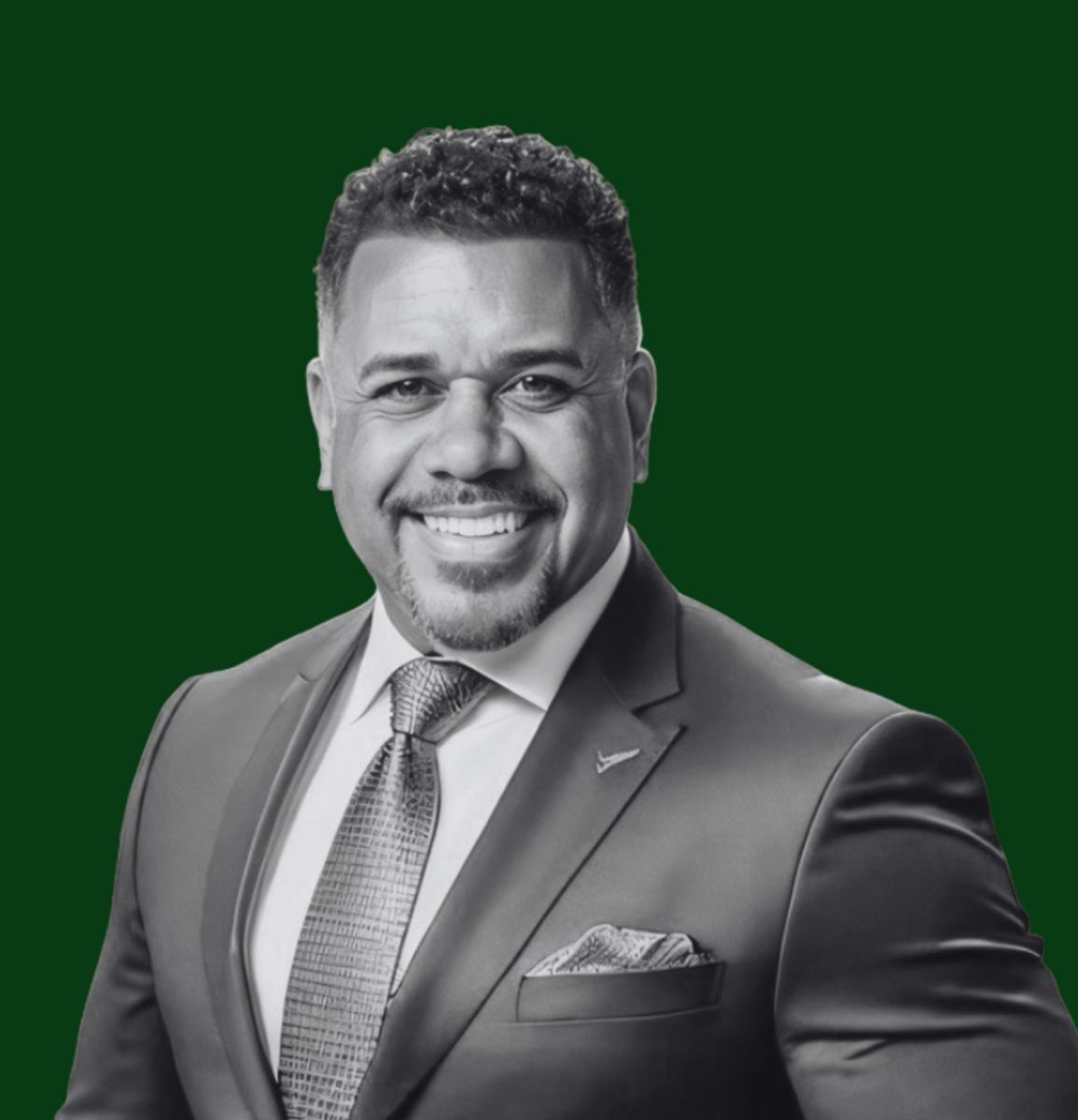


Warsh told Jackson Hole the Fed is committed to a discipline, not a decision, then named inflation the predominant focus. Treasury's buyback round-tripped in three sessions. Nvidia posted its largest quarter ever but guided margins to a trough. Core PCE held at 3.3%. Canada matched Washington dollar for dollar.
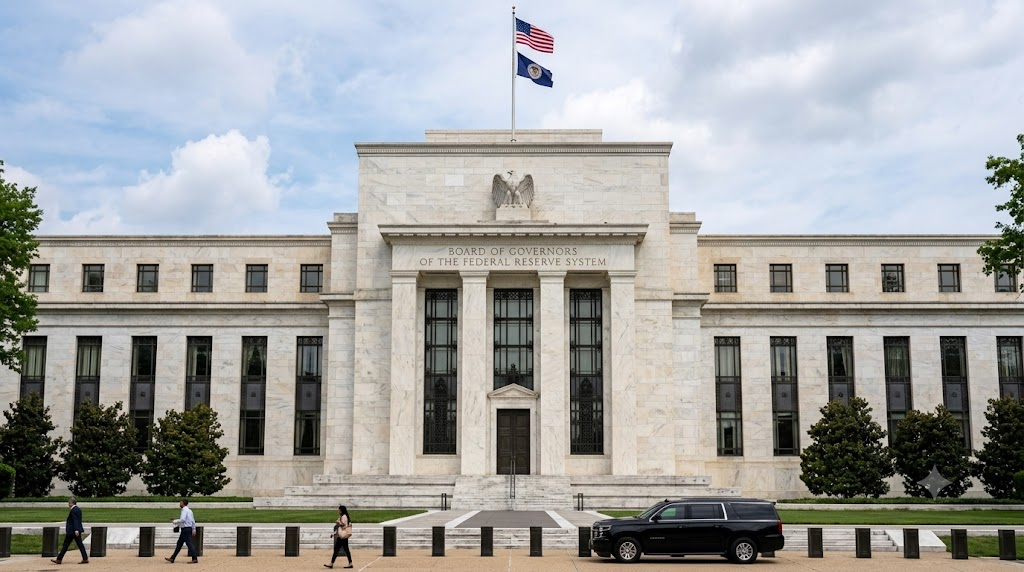
Five trading days. The bond market took control of the story. Then Warsh took the podium.
The week opened with Treasury's near $1 trillion General Account ready to fund buybacks. Five Wall Street firms said it would not work. Druckenmiller called it a mistake. The 30-year gave back nearly every basis point the intervention had bought.
On Friday, Warsh delivered his first Jackson Hole keynote. He titled it "In Our Time." He said inflation is the Fed's predominant focus. He said forward guidance has overstayed its welcome. He declined to give a reaction function. He said 54% of goods and services in the PCE basket still show price increases above 3%. Then he put the blame where it belongs: 65 months of elevated inflation sits squarely with the central bank.
He did not signal September. He said he is committed to a discipline, not to a decision. Cleveland's Hammack said the same morning that now is the time to act. Kansas City's Schmid called inflation stubborn and sticky.

The $16 Trillion Rare Earth Discovery
The Guardian calls it "the beginning of the biggest gold rush in history"... and one stock under $5 owns exclusive rights to harvest these rare earths.
Elon Musk and his companies need these minerals before a January 1 Pentagon deadline.
Warsh Named the Inflation Problem and Refused to Name the Date
The speech the bond market waited all week for arrived Friday at 10 a.m.
Warsh said the six-month change in PCE is 4.1%. The 12-month rate is 3.7%. Both are above target. He said 54% of the PCE basket still shows price increases above 3%, well above the 32% average in the two decades before the pandemic.
He refused to provide forward guidance. He called it a crisis-era tool that creates a hall-of-mirrors problem. When markets rely on the Fed and the Fed relies on markets, both get blinded. He said those without financial assets bear the biggest cost of that error.
He also said broad financial conditions are not restrictive. Credit spreads are near their lows. Bank lending standards are on the easier end. Loan growth is strong. That is a hawkish read. A Fed chair who says conditions are not tight is a chair who sees room to tighten.
Hammack went further the same morning. She said now is the time to act on rates. Schmid said inflation is stubborn.
The Signal
Warsh named inflation as predominant and refused to guide. The 30-year's response decides whether the bond market reads that as discipline or evasion. Any close above 5.30% before the FOMC on September 16 names the market as unsatisfied.
The Buyback Failed Before Warsh Spoke
Treasury doubled its long-end buyback sizes on August 19. The 30-year fell nine basis points that day. It gave eight of them back in two sessions.
This week added voices. Citadel Securities called it financial repression. Druckenmiller wrote that governments defending prices against fundamentals always lose. Goldman Sachs (GS) said the buybacks are unlikely to reset rates. Wells Fargo (WFC) said a real catalyst is needed.
France's 10-year yield rose twice as fast as the U.S. version since June. Japan's debt bill rises 17% next year. Global debt passed $350 trillion. Bank of America (BAC) warned a structural-only speech could send the 30-year to 5.5%.
Warsh did address the bond market indirectly. He said the Fed needs clear, unfiltered market signals. He said the Fed should never be naive about its role. But he declined to name the Treasury's intervention or the long end.
The Signal
The enlarged buybacks start September 10. Warsh left the long end to the market. That gap between the Treasury pushing yields down and the Fed refusing to endorse it is the unresolved tension heading into September.
Why are companies flying spy planes over Elon's closely-guarded AI lab?
Elon did the seemingly impossible – far faster than anyone expected...
And it's sent the tech industry into PANIC MODE.
ChatGPT, Claude, Google Gemini, and DeepSeek could soon become obsolete.
And three little-known firms could soar 10X or higher as a result.
Nvidia Beat the Quarter and Opened a Cost Problem
Nvidia (NVDA) posted record revenue of $96.2 billion, up 106%. Data-center sales hit $89 billion. The guide came in at $108 billion. The stock rose 8.7% Thursday, adding about $440 billion.
Then the question moved from demand to cost.
Gross margin held at 75% but falls to 74% next quarter and troughs near 71%. The repair comes from price rises. Supply commitments more than doubled to $279 billion. Nvidia backstops roughly $230 billion in obligations while holding $80 billion in cash.
The company also paused its AI Compute Partnership on antitrust concerns.
Warsh's speech gave this context. He said business capex is rising at 9%, its highest since 2021. More than half of that growth comes from AI. He said expectations for earnings growth are running quite high and he is watching the second derivative.
The Signal
A November guide that still shows 71% means the price rise has not landed. Warsh watching the second derivative of AI capex means the Fed sees the same concentration risk the market does.
The AI Trade Split Between Software and Silicon
Salesforce (CRM) surged 22%. Agentforce revenue topped $3.9 billion annualized. Claudeforce with Anthropic put Claude into its CRM stack.
Marvell Technology (MRVL) fell 7.6% after record revenue of $2.74 billion. A major Google deal will not drive revenue until fiscal 2029.
Okta (OKTA) rose 28%. CrowdStrike (CRWD) jumped 20.5%. The market paid for software that earns now and sold silicon that promises later.
About 43% of Salesforce's EPS came from an investment gain, including an Anthropic stake that last priced in May.
The Signal
Software over semis for 30 days confirms yields are steering rotation. A lower Anthropic mark in Q3 reprices the beat.
On September 8th, a powerful new law signed by President Trump
will trigger a radical shift in America’s money system...
When a small group of private companies — not the Fed — will perform a major mint of a new kind of money.
And those who act before this new system fully kicks in could see gains as high as 40X by 2032.
But those who fail to prepare will be blindsided by this sea change to the U.S. dollar.
Go here now for the details — before the September 8th mint hits the market.
Two Trade Wars Landed at Once
Treasury Secretary Bessent launched Operation Economic Outcast. Nearly 60 entities were sanctioned. Oil sold the news. Brent fell from above $93 to near $87 as Iran and Oman discussed a Hormuz revenue-sharing framework.
Canada announced tariffs on roughly $20 billion of U.S. goods from September 8. Trump said auto tariffs will rise to 50% on January 1. Ford (F) and Stellantis (STLA) fell.
Warsh's speech did not name tariffs. But he noted that geopolitics, supply chains and technology are changing fast. That is the closest he came to framing the cost shocks the market is pricing.
The Signal
Any automaker Canadian plant closure in 60 days confirms the supply chain is repricing now. A documented Iran-Oman shipping fee converts that input into an operational cost.
The Capital Pipeline Tested Its Own Exit
The post-Labor-Day IPO calendar is the largest in five years. Anthropic is targeting a valuation near $2 trillion. SpaceX (SPCX) announced a $100 billion Louisiana spaceport.
SpaceX closed Monday at $135, exactly where it priced in June.
OpenAI's Jalapeno chip beat Nvidia's GB300 in power efficiency. Broadcom (AVGO) helped build it. Meta (META) agreed to $16.7 billion in child-safety settlements. Bill Gates warned there is no plan for AI's labor cost.
Warsh acknowledged AI could become a new factor of production. But he said the task forces studying it have no bearing on current policy decisions. The capital cycle gets no relief from the Fed until the task forces report.
The Signal
Any autumn IPO below its last private round makes SpaceX's pattern the template. Warsh's separation of AI from current policy means the rate backdrop stays the binding constraint.
Middle East Conflict Lights Fuse on US Debt Bomb
America was already drowning in $38 trillion of debt, but the recent conflict in the Middle East just accelerated the timeline.
As oil spikes, a 100-year-old stock market signal that accurately predicted the 2008 and 2020 crashes is flashing a massive "Sell" on dozens of popular U.S. equities.
If you hold the wrong stocks when this debt crisis hits, it could wipe out years of gains.
Click here to see the 10 popular stocks to dump immediately
11780 US Highway 1, Palm Beach Gardens, FL 33408-3080 Would you like to edit your e-mail notification preferences or unsubscribe from our mailing list? Copyright © 2026 Weiss Ratings. All rights reserved.
Six sequences. One speech.
Warsh told Jackson Hole exactly what kind of Fed chair he plans to be. One who takes ownership of 65 months of elevated inflation. One who calls forward guidance a crisis relic. One who says financial conditions are not restrictive and inflation is the predominant concern.
He did not signal September. He committed to a discipline, not a decision. Hammack said now is the time. Schmid said inflation is stubborn.
Treasury's buyback failed. Nvidia answered demand and opened a cost problem. Salesforce proved software earns now. Marvell proved strong numbers fail when the payoff shifts. Two trade wars added costs the speech did not name.
The bond market spent the week asking Warsh to choose. He chose inflation as his priority and silence as his method.
The market now decides whether discipline without a date is enough.
