

Warsh said financial conditions are not restrictive and hike odds jumped to 58%. The 2-year had its biggest single-day move since June. Chevron is nearing Venezuelan oil deals.
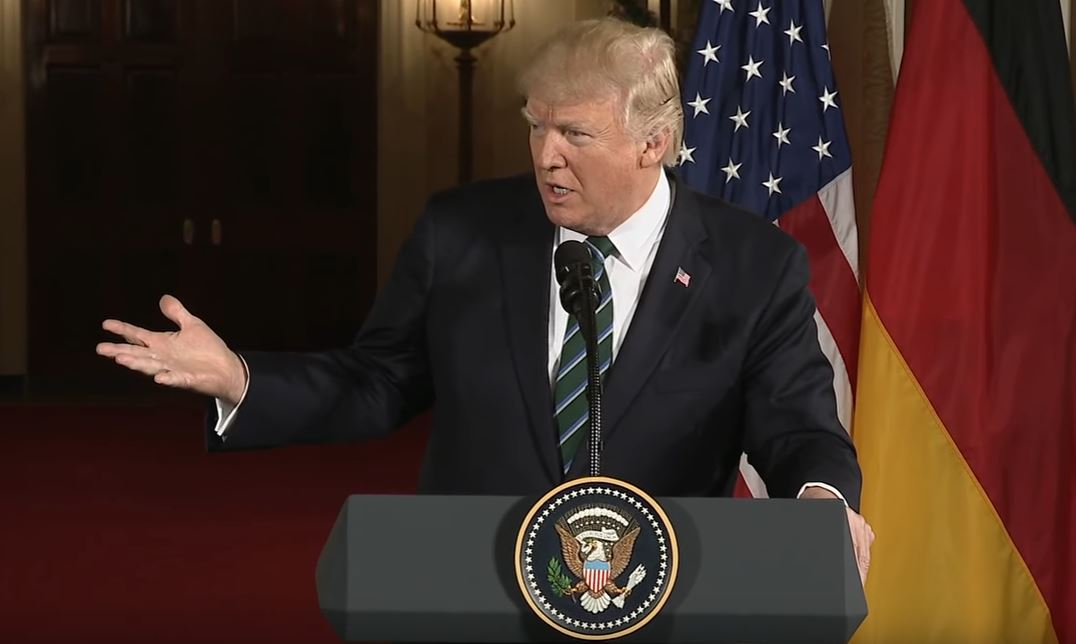
Warsh spoke at Jackson Hole this morning.
The market had spent two weeks waiting for it. He delivered more than expected.
Stocks finished lower despite an initial rally. The bond market's reaction told the cleaner story. Warsh gave investors the hawkish reading they wanted. The anxiety that drove the long-end selloff started to unwind.
Four stories sit underneath that speech. Each one adds a layer to what September now looks like.
PMD LENS
Warsh said financial conditions are not restrictive. He said the Fed has work to do. He said his inflation target is firm and fixed. He did not promise September. But the direction became unmistakable for the first time since he took the chair. The bond market answered by doing exactly what two weeks of analysis predicted: once he gave the reading, the term-premium anxiety eased.
In January, Gold Touched Nearly $5,600 an Ounce. Today It's Around $4,100.
So the story's over, right?
Then explain this.
The metal is still leaving the vaults. Physical deliveries still running at levels the exchange rarely processed before. Central banks still buying. Dealers charging 30-40% premiums over paper price for real coins.
When price falls but physical demand doesn't — only one of those two is telling the truth.
The paper market sets the price. The physical market sets the deadline.
Anyone who wished they'd bought miners before January's run just got handed the entry back.
One company I've been tracking controls an 88 million ounce deposit — trading near $4 billion. About 1% of the value of its metal in the ground.
That gap is the whole opportunity.
Warsh Delivered. Hike Odds Jumped to 58%. The Bond Market Reversed July.
Warsh's opening line set the tone. "You can call it an outline, you can call it a trail map. Just don't call it forward guidance." Then he spent 30 minutes saying more than anyone expected.
On conditions: "I would be hard-pressed to describe broad financial conditions as restrictive." On inflation: this summer's softer readings "do not tell me that underlying trends have meaningfully improved." On the target: "a firm, fixed" 2% goal that is "closely minded." On the tool: "short-term interest rates are the predominant instrument."
Rate futures moved to 58% odds of a September hike per CME data. Up from 35% before the speech. The perceived chance of two or more hikes by year-end jumped to 51% from 29%. A former Fed president framed the stakes plainly. Six years above target. You cannot keep saying it is your job and not act.
The bond market gave the clearest verdict. The 2-year yield posted its biggest one-day jump since June. The 30-year fell. That is the exact opposite of what happened after his July press conference. Back then, the long end sold off on fear that Warsh had no plan. Today, by naming the direction, he eased exactly that fear.
He still withheld the date. "I stand here today committed to a discipline, not to a decision." He also ruled out his AI task forces as having "no bearing" on near-term policy, quietly walking back hints that AI productivity might justify holding. The hedge is real. But the direction is no longer deniable.
What September Decides
The August jobs and CPI prints land early next month. Warsh said those are the data that will decide it. Hike odds at 58% mean the market believes him.
Buffett, Gates and Bezos Quietly Dumping Stocks—Here's Why
The world's wealthiest individuals are making huge moves with their money.
Warren Buffett just liquidated billions of shares. Bill Gates sold 500,000 shares of Microsoft. Jeff Bezos filed to sell Amazon shares worth $4.8 billion.
What is going on? One multi-millionaire believes they are preparing for a catastrophic event. But not a crash, bank run, or recession. It’s something we haven’t seen in America for more than a century.
SIGNAL 1: Chevron Is Nearing Venezuelan Oil Deals. Venezuela May Exit OPEC.
Chevron (CVX) is close to adding two heavy-oil fields in Venezuela. Halliburton (HAL) is in talks on equipment. Executives from several US energy companies sign production deals in Caracas next week. The Energy Secretary is expected to travel there. ExxonMobil (XOM) and ConocoPhillips (COP) are staying out, still seeking restitution from the 2007 nationalization.
Venezuela may also exit OPEC, the second nation after the UAE to consider leaving in months. The two exits together would remove more than 5 million barrels a day from the cartel, roughly 17% of core output at the start of the year.
This connects directly to what Warsh named as the inflation wildcard. He cited geopolitics and supply chains as the reasons he held back in July. Energy is the sharpest of those variables. A US foothold in the hemisphere's largest reserves is the supply-side answer to exactly the inflation pressure the Iran war caused.
The Signing Is the Signal
Any Chevron or Halliburton deal next week converts months of talks into production. A Venezuela OPEC exit in 90 days tests whether the cartel holds at all.
SIGNAL 2: Japan Spent a Record $98.7 Billion on the Yen. It Barely Moved.
Japan spent $98.7 billion propping up the yen last month in a joint action with the US. It was a record. The yen gave back most of its initial gains. It traded near 159 to the dollar on Friday, versus 164 before the intervention. Combined with the spring defense, Japan's 2026 total hit roughly $170 billion. The Peterson Institute called it "at best a short-term corrective," because exchange rates follow monetary and fiscal policy, not spending.
Warsh made the same point implicitly today. He said the Fed needs market signals "as unfiltered as possible," a quiet rebuke of price management as a strategy. Bessent ran both interventions, the yen defense and the Treasury buyback. Both ran into the same wall. Governments spending to move a price lose to fundamentals. Japan just spent $98.7 billion to prove it.
The BOJ Is the Real Fix
A BOJ hike at the September 17 to 18 meeting narrows the rate gap driving yen weakness. Any slide back toward 164 confirms the intervention's limits.
SIGNAL 3: a16z Raised $1.1 Billion for Hardware. The Capital Is Chasing the Physical Layer.
Andreessen Horowitz raised $1.1 billion for its first dedicated hardware fund, targeting AI chips, memory, networking, and robotics. Fifteen years after Marc Andreessen said software was eating the world, the firm is betting on the physical layer. Partner Martin Casado said every part of the hardware supply chain is capacity constrained, from chips to memory to power.
Semiconductor and autonomous-machine startups raised roughly $100 billion over the past year. Cerebras IPO'd in May. Groq licensed its technology to Nvidia (NVDA) in a $20 billion deal.
When the firm that defined the software era raises a dedicated hardware fund, the capital has followed the constraint. The AI buildout's bottleneck is not code. It is chips, memory, and power. That is where venture is now going.
The Next Fund Is the Confirmation
Any dedicated hardware fund above $1 billion in 90 days confirms this is a rotation, not a one-off bet.
Could This Stock Be “Trump’s Next Big Buy”?
Jim Rickards believes the Trump administration is about to take a direct stake in a tiny $2 stock.
The Trump administration has taken a direct stake in MP Materials, Lithium America, Trilogy Metals, and USA Rare Earth.
Each time, shares sprinted higher. Click here to see why Jim believes this one is next.
Oil executives sign in Caracas next week. The G20 tech event with Musk, Altman, and Huang lands September 1. Canadian retaliation takes effect September 8. The first accelerated Treasury buyback runs September 9. September FOMC is September 15 to 16. The BOJ decision follows September 17 to 18. August CPI and jobs land before all of that and now carry the most weight of anything on the calendar.
Warsh named the direction without naming the date. Hike odds jumped to 58% and the 2-year had its biggest single-day move since June. Chevron is nearing Venezuelan oil deals as OPEC's cohesion frays. Japan spent a record $98.7 billion on the yen for almost nothing. a16z raised $1.1 billion chasing the AI buildout's physical constraints. The gap that defined the whole week, between what a hot inflation print required and what Warsh would say he would do, closed partway today. He named the direction. He did not name the date. That gap now sits alongside the lesson Japan just retaught: governments spending to fix a price lose to fundamentals. September's data decides whether the direction Warsh named becomes the hike the market is now pricing at 58%.
Warsh named the direction. Venezuela named the energy variable underneath the inflation he is fighting. The yen named the limit of intervention. a16z named the capital still chasing the buildout.
The open question is no longer whether Warsh will say what he intends. He said enough today that the long end fell for the first time in two weeks. What remains is whether the August data lets him act on it, or hands him one more reason to wait.
